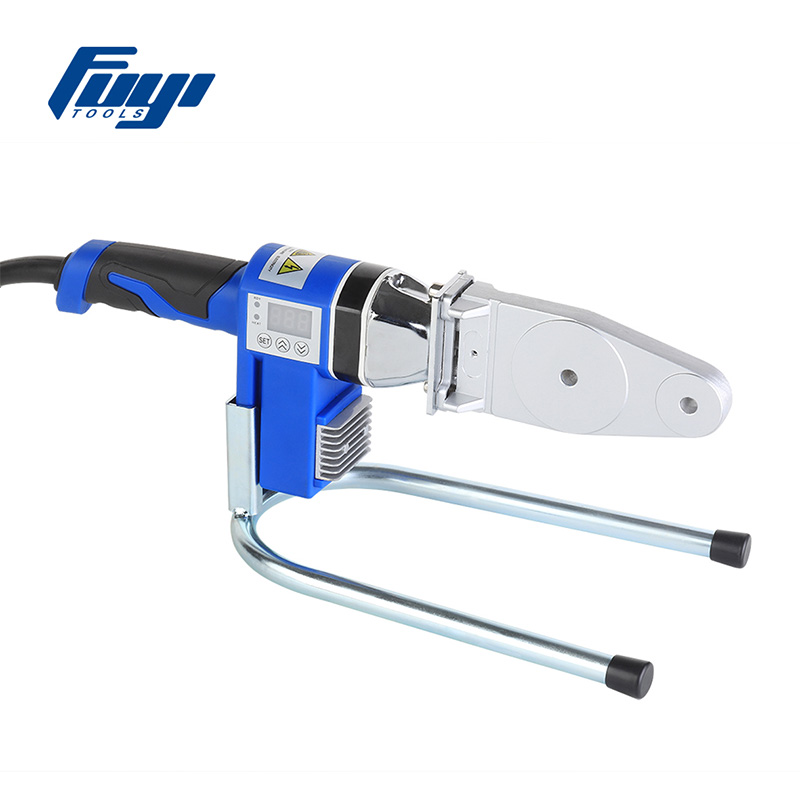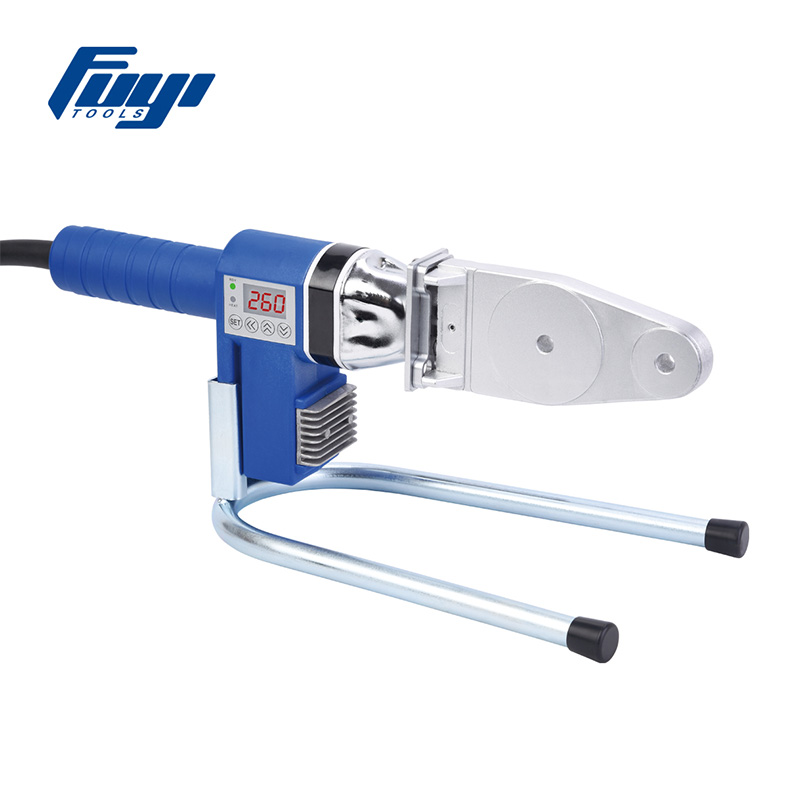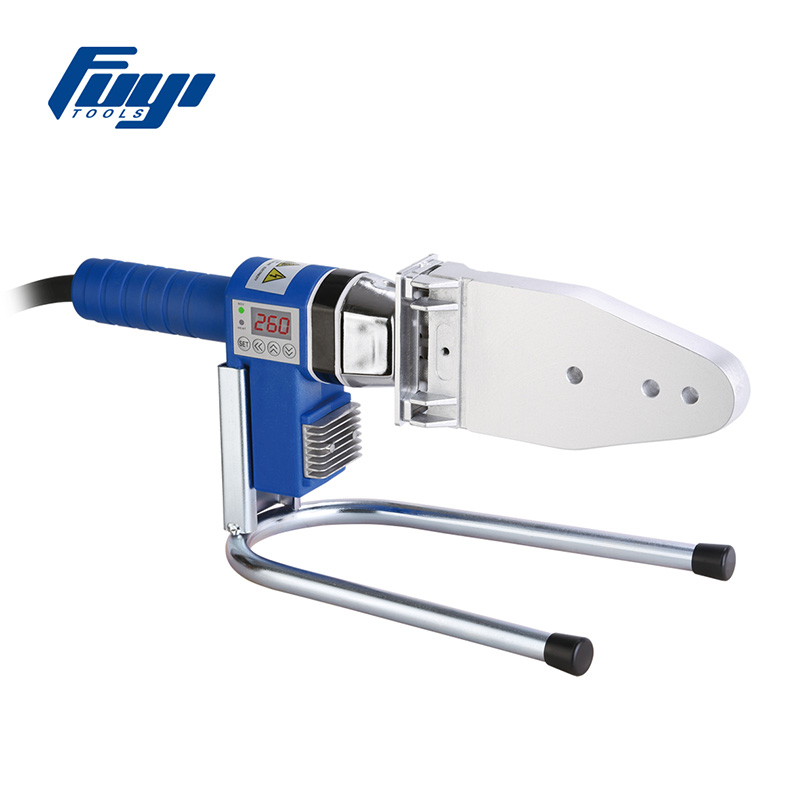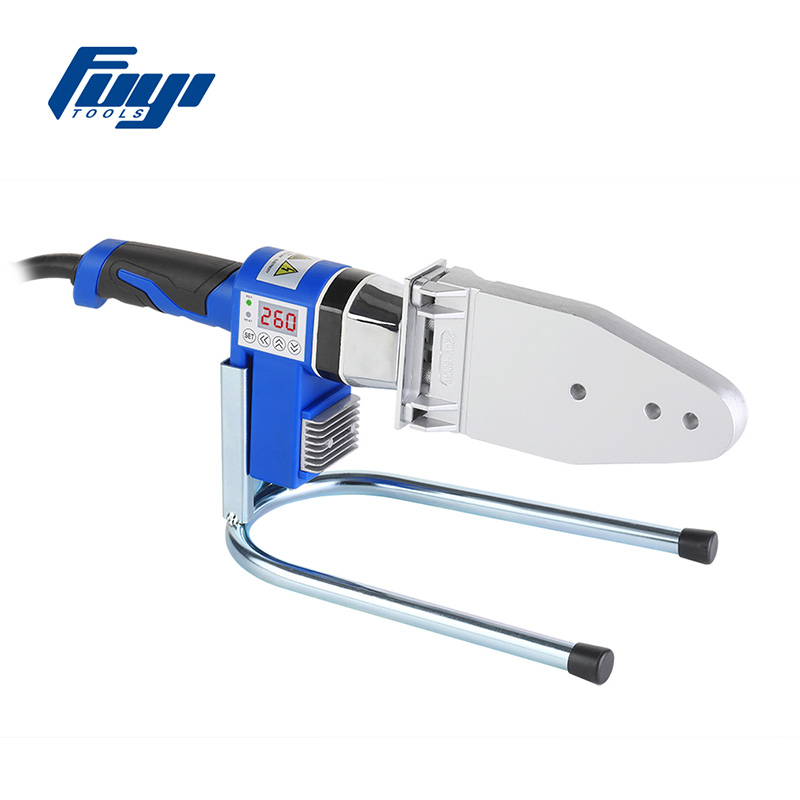
In the rapidly evolving landscape of plastic pipe installation, the efficiency of your project often hinges on the reliability of your equipment. For field technicians working on HDPE water mains or gas distribution networks, a portable electrofusion welding machine is more than just a tool—it is the heart of the operation. Selecting the right machine requires a balance between technological sophistication and rugged practicality.
When discussing “portability,” weight is the primary metric. However, true portability in the utility sector is about more than just a low number on a scale; it’s about how that weight is distributed and protected.
A professional-grade portable welder should ideally weigh between 10kg and 15kg. This allows a single operator to carry the unit across uneven trenches or up scaffolding without physical strain. However, the internal components—transformers, cooling fans, and capacitors—must not be compromised to achieve this lightness.
The handle design should allow for gloved operation, and the cable management system should prevent tangling. A compact footprint ensures the machine can be placed steadily on unstable ground or inside narrow manholes, which is a common requirement in urban pipe repair projects.
In the modern regulatory environment for gas and water utilities, “traceability” is a mandatory requirement. If a joint fails ten years from now, the utility provider must be able to trace back the exact conditions under which that weld was made.
A top-tier portable electrofusion machine must feature an internal memory capable of storing at least 1,000 weld records. Each record should capture critical parameters, including:
The ability to transfer data via USB, Bluetooth, or Wi-Fi is vital. Modern site managers prefer machines that sync with mobile apps, allowing for real-time cloud uploads. This digital “paper trail” minimizes human error in manual logging and ensures that the project meets international standards such as ISO 12176-2.
The speed of a welding operation often depends on how quickly the machine can “read” the fitting. A portable welder must be versatile enough to handle various input methods under suboptimal field conditions.
Standard barcode scanners often struggle with dirty, scratched, or sun-faded barcodes on HDPE fittings. High-quality machines utilize CCD or Laser scanners with enhanced sensitivity. This ensures the welding parameters (Voltage, Fusion Time, and Cooling Time) are uploaded instantly without the technician having to wipe down every fitting multiple times.
Fieldwork is unpredictable. If a barcode is completely destroyed, the machine must allow for Manual Data Entry.
Environmental factors are the leading cause of “cold welds” or “over-melting.” A smart portable welder must actively adapt to the surrounding atmosphere to ensure joint integrity.
As the ambient temperature fluctuates from a cold morning to a hot afternoon, the electrical resistance of the HDPE fitting changes. A premium electrofusion machine uses an external temperature probe to measure the air temperature and automatically adjusts the fusion time ($t$) according to the specific heating curve of the fitting.
The stability of the output voltage is critical. Even a 1% deviation in voltage can lead to a significant change in energy input ($E = V^2 \cdot t / R$). The machine’s internal processor must monitor the output in real-time, compensating for any fluctuations to maintain a steady flow of energy to the heating coils.
| Feature Comparison | Entry-Level Welder | Professional Portable Welder |
|---|---|---|
| Weight | >20kg | 10kg - 13kg |
| Input Voltage Range | Fixed 230V | 180V - 280V (Wide Range) |
| Memory Capacity | None or <100 joints | 1,000+ joints |
| Scanning | Manual Only | Laser Barcode + Manual |
| Protection | IP21 (Indoor only) | IP54 (Outdoor/Weatherproof) |
Portable electrofusion welders are almost exclusively powered by mobile generators. However, generators are notorious for producing “dirty power”—voltage spikes and frequency fluctuations that can destroy sensitive electronics.
This is perhaps the most overlooked technical feature. PFC technology allows the welder to utilize the power from a generator more efficiently. It smooths out the input current, making the machine less sensitive to voltage drops caused by long extension leads or fluctuations in the generator’s engine speed.
If a generator runs out of fuel or stutters, it often sends a massive voltage spike through the line. A high-quality portable welder includes over-voltage protection and automatic shut-off triggers to protect its internal circuitry. This reliability is crucial when working in remote areas where getting a machine repaired might take days or weeks.
Q: Can a portable electrofusion machine weld all sizes of HDPE pipes?
A: Most portable machines are optimized for pipes up to 400mm or 630mm. For very large diameter pipes (e.g., 1200mm), a high-output industrial welder is usually required due to the massive energy demand.
Q: How often does an electrofusion machine need calibration?
A: According to international standards, it is recommended to calibrate your machine every 12 months to ensure the voltage output and temperature sensors remain accurate.
Q: What is the benefit of a “Universal” welder?
A: A universal machine can read barcodes from any fitting manufacturer (e.g., Georg Fischer, Plasson, Friatec), giving you the flexibility to source fittings based on price and availability.
Copyright © 2024 Hangzhou Fuyi Tools Co., Ltd. All Rights Reserved.
|