

 Eng
 русский
 Español
Home / News / Industry News / Socket Fusion Welding Machine Guide: Sizing, Control Types & Field Tips
Industry News
Nov 09,2026
Socket Fusion Welding Machine Guide: Sizing, Control Types & Field Tips
Some tools earn their place on a service van because a specification sheet says they should. A socket fusion welding machine earns it differently: six months later the crew still reaches for it without thinking. That gap — between a machine that looks right on paper and one that behaves well in the rain, on a scaffold, at the end of a long shift — is the part of the work we care about most.
We build pipe fusion equipment in Linpu, Xiaoshan, about half an hour from Hangzhou Xiaoshan International Airport and within easy reach of the Ningbo and Shanghai ports. Sixteen years of shipping to Europe, Russia, the United States, Mexico, Chile and Asia have taught us one simple thing: the welder is only half of a good joint. The other half is preparation, and the two halves have to be designed to suit each other.
16 years of export experience
20–200 mm diameter coverage across the range
FYF / FYD constant temperature and digital control options
What follows is not a sales page. It is the explanation we give when a distributor asks why two machines that look almost identical cost different amounts, and why a contractor should care about a chamfering tool as much as about the heating plate.
How a Socket Fusion Weld Actually Forms
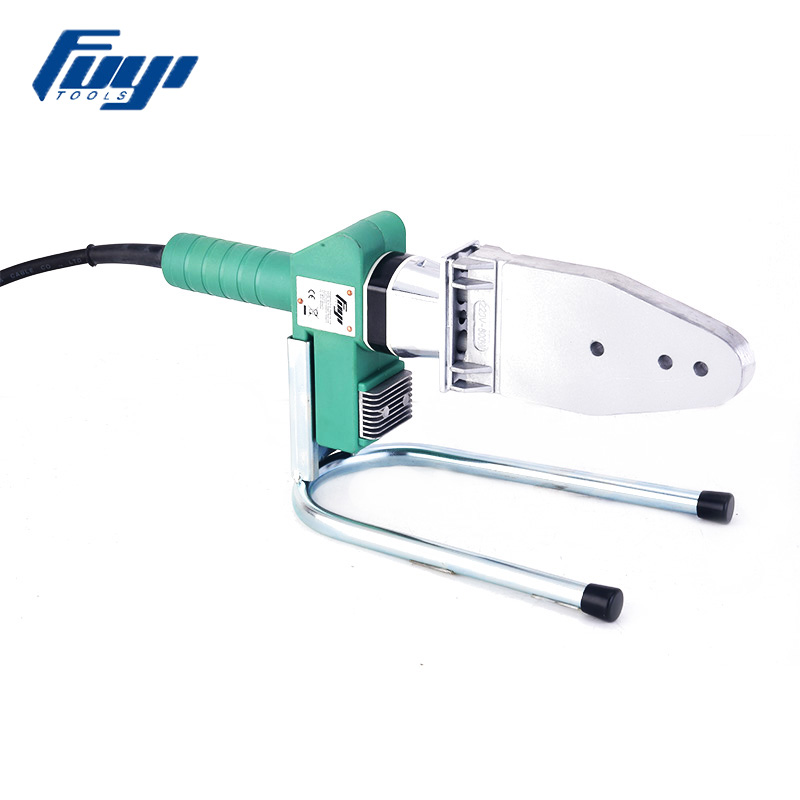
A socket fusion welding machine is, mechanically, a very simple device. A flat heating plate carries two pieces of tooling: a bush (the female side) that fits over the pipe end, and a spigot (the male side) that fits inside the fitting socket. The plate brings both tooling faces to the same temperature, the operator presses the pipe and the fitting onto them, and after the correct heating time the two molten surfaces are pushed together and held still until they cool.
What happens at the interface is the interesting part. The polymer does not glue. It melts to a controlled depth on both surfaces, and when the two melt layers are joined under light pressure, the long molecular chains entangle across the boundary. As the joint cools, that entangled layer becomes one continuous wall. If the melt depth is right, the joint is as strong as the pipe. If it is wrong — too cold, too hot, too long, contaminated — the joint may look acceptable and still fail in service.
The plate is usually set somewhere around 260 °C for PP-R and PE work, but the number that matters more is time: heating time, changeover time and cooling time all scale with diameter and wall thickness. Most field failures trace back to those three numbers rather than to the plate itself.
- Cut the pipe square and to length.
- Chamfer the pipe end so it enters the socket without scraping molten material.
- Clean both surfaces and remove every trace of oil, dust and moisture.
- Mark the insertion depth on the pipe.
- Heat pipe and fitting on the plate at the same time.
- Join straight, within a few seconds, with steady pressure and no twisting.
- Hold and cool without movement until the joint is fully rigid.
Every one of those steps has a tool attached to it, which is why we treat the machine and the accessory kit as a single product rather than two catalogue entries.
Constant Temperature or Digital Display? Both Have a Job
Two control families cover almost everything our customers do: the FYF constant temperature series and the FYD digital display series. Both heat a plate, and both use the same bush and spigot tooling for a given diameter. The difference is how much information the operator has about the temperature at any given second, and how much electronics you are willing to carry onto a site.
Constant temperature machines
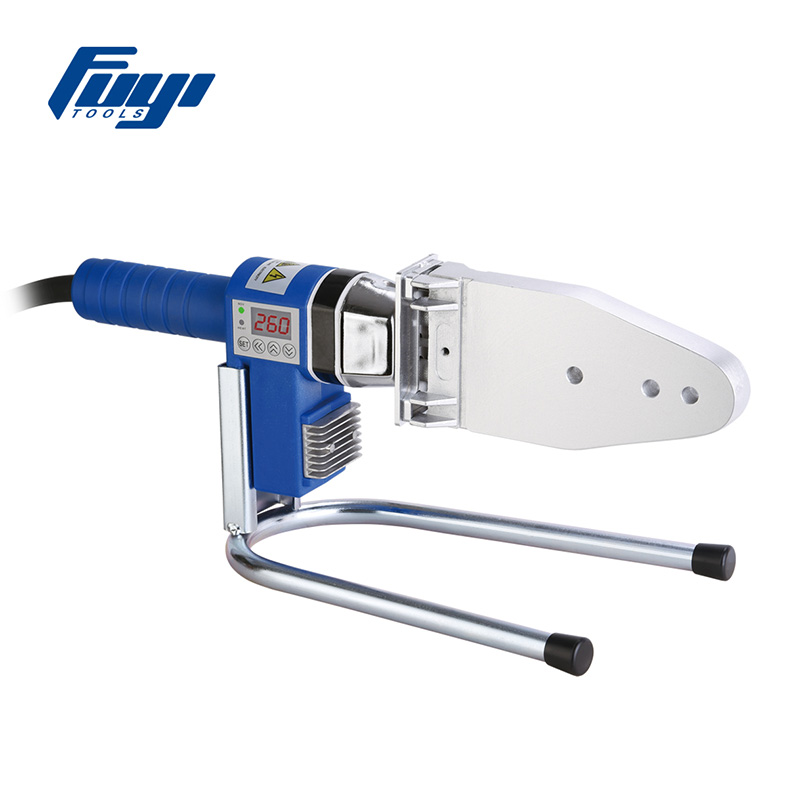
A thermostat holds the set point, a dial sets it, and there is very little else to go wrong. On a job where the same 25 mm joint is made two hundred times a day, that is not a limitation — it is a relief. Fewer components mean fewer failures, a lighter machine and a lower price per unit for a contractor buying five at once.
Digital display machines
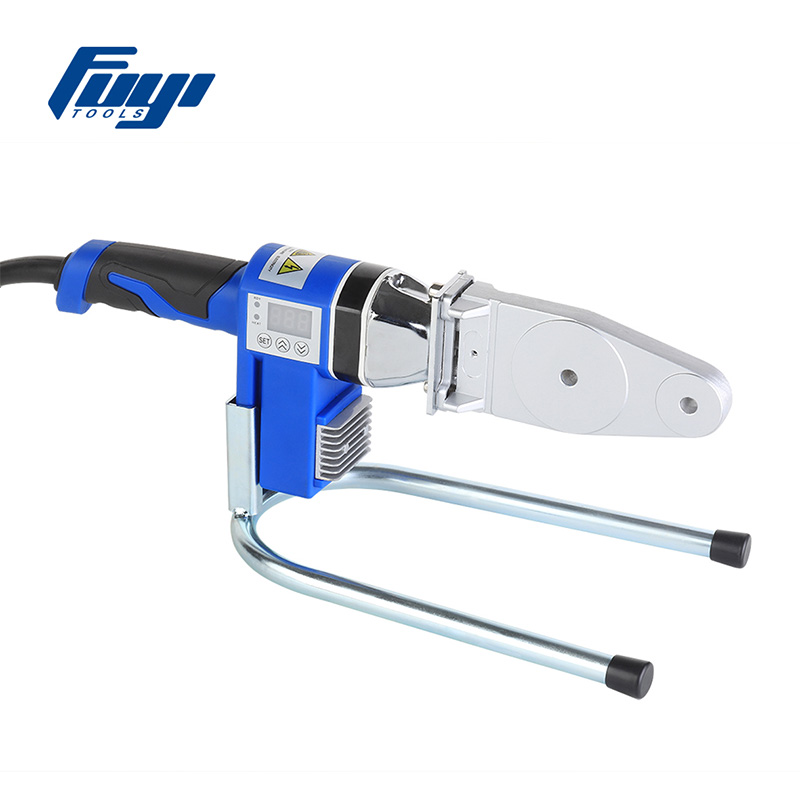
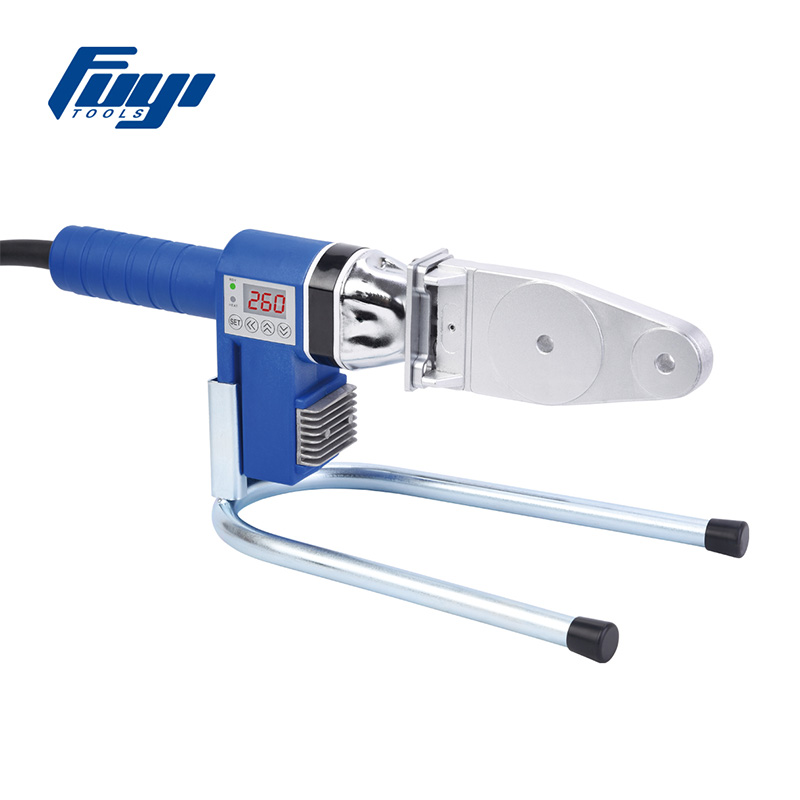
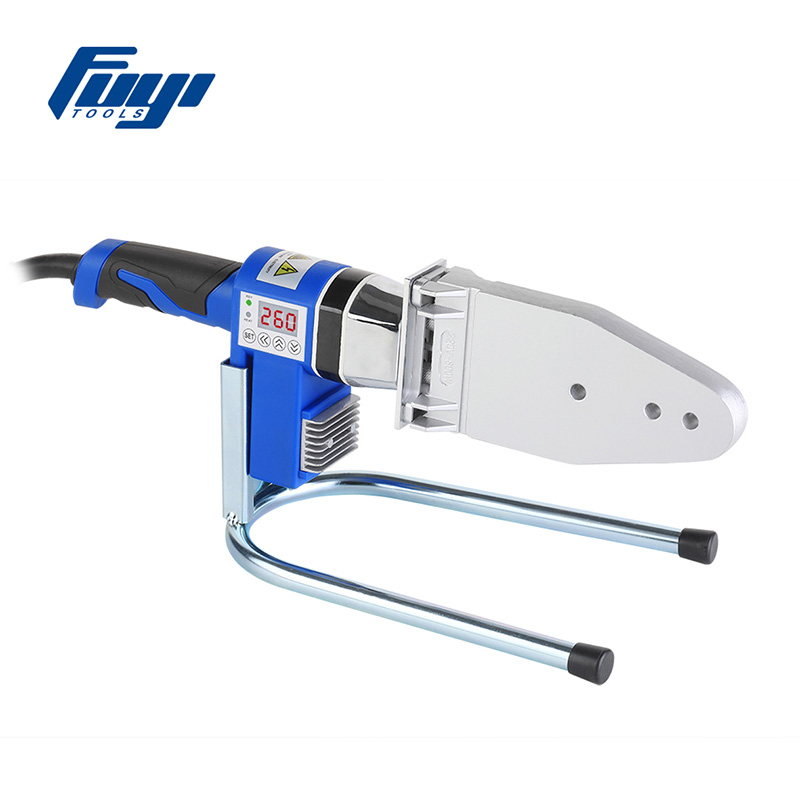
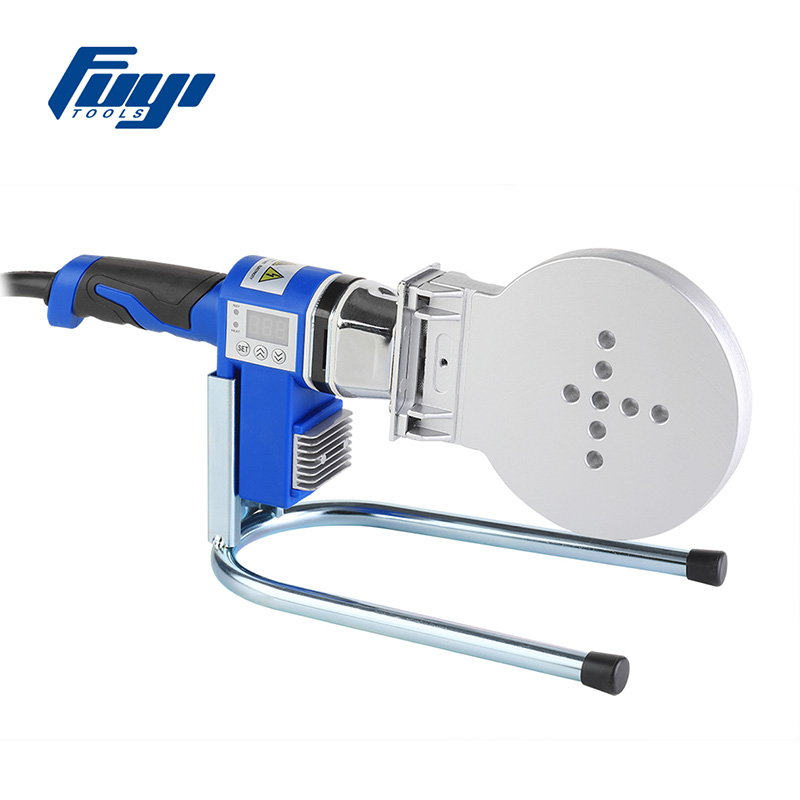
An LED window shows the actual plate temperature and buttons let the operator change it. That matters when a crew switches between materials in one shift, when an apprentice needs to see a number rather than trust a dial, or when a supervisor has to sign off on a joint record. The trade-off is a control board and a sensor that eventually need attention.
| What matters | Constant temperature (FYF) | Digital display (FYD) |
|---|---|---|
| Temperature readout | Dial or preset thermostat | LED window, live value |
| Changing the set point | Mechanical adjustment | Push buttons, quick between materials |
| Electronics on board | Minimal | Control board and sensor |
| Typical field repair | Thermostat or fuse | Sensor or board replacement |
| Commonly ordered for | 20–110 mm repetitive work | 40–200 mm work needing records |
| Best fit | Harsh sites, high volume, small bore | Mixed materials, training, traceability |
Sizing the Machine to the Pipe, Not the Other Way Around
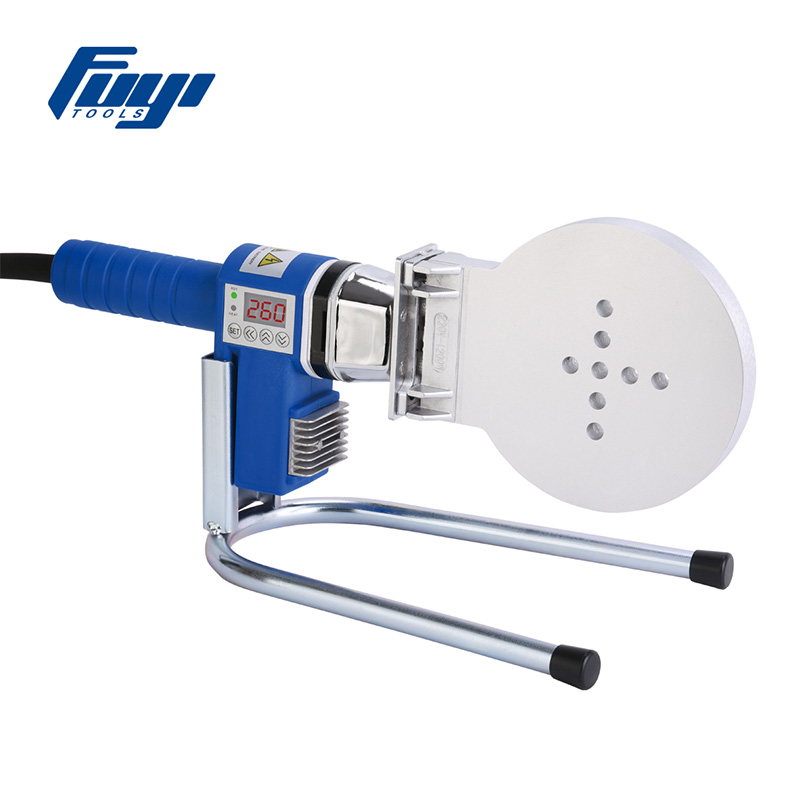
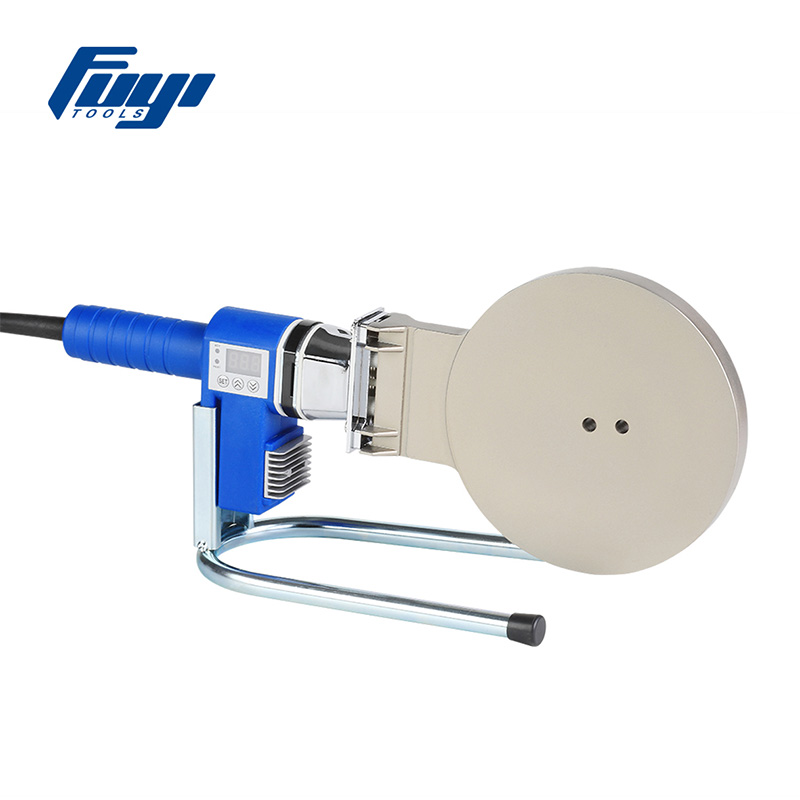
The number in a model name is the important one. FYD40 covers roughly 20–40 mm, FYD63 covers 20–63 mm, FYD110 covers 75–110 mm, and the FYD160 and FYD200 reach into 160 mm and 200 mm territory. The same logic runs through the FYF series, and through the portable FYFBY and FYDLL variants that trade a little plate mass for a much lighter case.
The mistake we see most often is a crew buying one large machine to cover everything. It works, technically. What it does not do is make a 25 mm joint comfortable: the plate is heavier, the tooling is bigger, the machine takes longer to stabilise, and the operator ends up supporting the welder with one hand while aligning a small fitting with the other. Two mid-range machines usually out-perform one oversized one on real sites.
20–32 mm
light, fast, one hand
20–63 mm
the workhorse band
75–110 mm
two hands, steady support
160 mm
plate mass starts to matter
200 mm
plan the joint before heating
Bars are qualitative, not measured data — they simply show how handling effort and the pressure on the heating window grow with diameter. A 20–63 mm digital machine is where most renovation and small-bore distribution work sits, and it is the size we ship most often to distributors who need one model that covers the widest practical range.
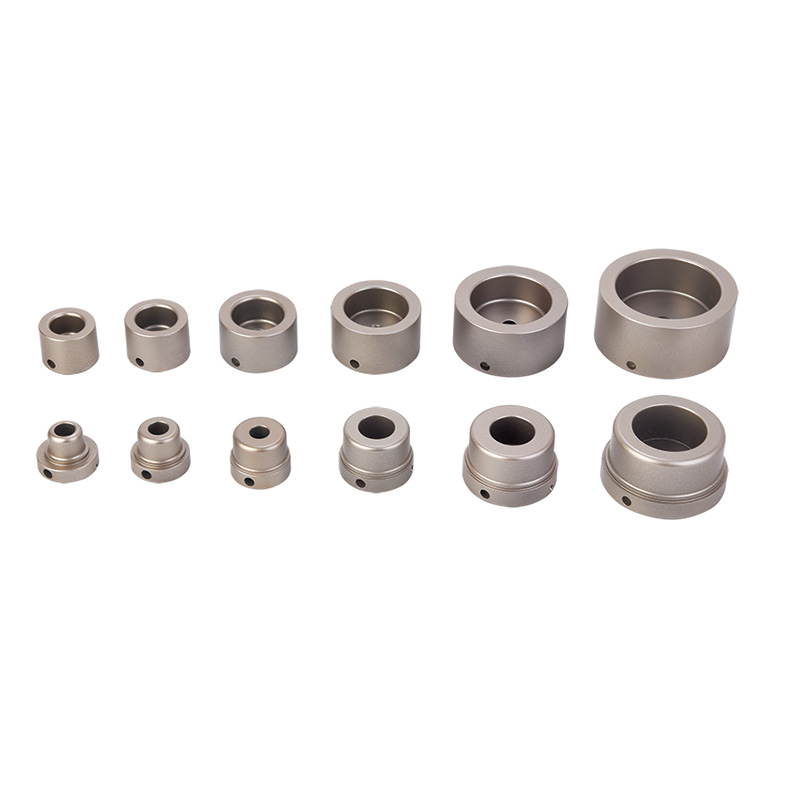 FYD63 Digital Socket Fusion Welding Machine for 20–63 mm PipeCovers 20–63 mm pipe with real-time LED temperature display and intelligent control, a practical single model for renovation and small-bore distribution work.View Product →
Metric and imperial, side by side
Diameter is not the only specification that varies by market. Chamfering tools, cold ring pliers and much of the accessory line are produced in both metric and inch versions, because a crew working to imperial standards cannot use tooling cut for metric pipe. When you specify a machine, specify the tooling standard at the same time — it is far cheaper than discovering the mismatch on site.
The Preparation Kit Does as Much Work as the Welder
Ask an experienced fitter what ruins joints and the answer is rarely the machine. It is a pipe cut with a hacksaw and left out of square, a burr that drags molten polymer out of the socket, or a fitting pushed together after the melt layer has already begun to skin over. The accessories exist to remove those variables.
Plastic pipe cutters
From light hose cutters to heavy-duty ratcheting shears and rotary cutters for larger diameters, a clean square cut is the first guarantee of an even weld ring. A cutter that crushes the pipe is worse than useless.
Chamfering tools
Metric and inch versions remove the outer burr so the pipe enters the socket smoothly and pushes a uniform bead ahead of it.
Pipe scrapers
For electrofusion work, scraping away the oxidised outer layer is mandatory; the same discipline helps on socket fusion joints exposed to weather.
Cold ring pliers
Metric and inch variants that hold and seat components squarely during assembly and repair tasks.
Measuring pads and depth marks
A simple template that takes the guesswork out of insertion depth — the single most common cause of a weak joint.
Hole saws and saddle sockets
For branch connections, a clean bore plus a weld-in saddle socket gives a joint that matches the rest of the system.
Repair sockets
When a section has to be cut out, repair sockets let the crew rebuild the line without replacing a whole run.
Heat insulation jackets
A small accessory with an outsized effect on cold, windy sites, where the plate loses heat faster than the thermostat can recover.
 FYC-105 Plastic Pipe Cutter for 3–42 mm PipePrepares 3–42 mm plastic pipe for fusion welding with a PTFE-coated stainless steel blade, supporting clean cuts before PP-R or PE jointing.View Product →
A Field Workflow, From Cut to Pressure Test
The sequence below is what we recommend to crews installing PP-R or PE systems. It is not the only correct order, but it is the one that produces the fewest callbacks.
- Confirm the material and wall thickness. PP-R and PE behave differently under the same plate temperature, and heating times scale with wall thickness as well as diameter.
- Let the plate stabilise. Ten to fifteen minutes after switch-on is typical; a plate that reads correct but has a cold edge will produce an uneven bead.
- Cut square and deburr. Check with a square if the cut matters structurally.
- Chamfer, then wipe. Chamfer first, then clean both surfaces with a lint-free cloth and a suitable cleaner. No grease, no silicone, no water film.
- Mark the insertion depth with the measuring pad or a marker.
- Heat simultaneously. Pipe on the bush, fitting on the spigot, both at the same moment, pushed on with light steady pressure — not forced.
- Join within the changeover window. Pull both off the plate together, align, and push straight in to the depth mark. No rotation, no re-angling.
- Hold, then leave it alone. Light pressure for the first few seconds, then complete cooling without load, water or backfill.
- Pressure test after full cooling. Testing a warm joint proves nothing except that the pipe was still soft.
If you want the detail behind steps six to eight, our own technicians wrote up their best practices for a strong, leak-free weld, including how to read a weld bead that looks almost right.
Where Socket Welds Go Wrong
Over the years we have collected the same handful of symptoms from customers on five continents. Almost none of them require a new machine; most require a change in technique or one missing accessory.
The joint weeps at the shoulder
Usually misalignment or insufficient insertion depth. The pipe went in at an angle, or stopped short of the mark, leaving a thin section at the root. Fix the marking habit before changing anything else.
The weld ring is uneven all the way round
Uneven heating. Either the operator pressed harder on one side, or the plate was cooler near an edge because the tooling was damaged or the jacket was missing on a windy day.
The pipe bottoms out too easily
Over-chamfering. A generous chamfer feels helpful and quietly removes the material that should have formed the bead. Check the tooling against the fitting depth.
The display shows temperature but the plate feels cool
Sensor contact, not a dead heater. On digital units the thermocouple has to sit tight against the plate; a loose fitting reads the air around it.
Joints fail months later, not on test day
Residual stress. Someone moved the pipe, hung a tool on it, or backfilled before the joint had cooled. The weld was fine; the cooling was not.
Bead forms but pulls away when the plate is removed
Contamination, usually moisture or oil. On PE in humid conditions, a wipe that feels dry enough often is not.
Specifying a Machine You Will Still Be Using in Five Years
Price is the easiest thing to compare and the least useful thing to compare alone. These are the points we would ask about if we were buying from someone else.
Plate mass and flatness
A thick plate recovers temperature quickly when a cold pipe is pressed onto it. A thin one dips and takes time to come back, which quietly shortens effective heating.
Tooling availability
Bushes and spigots in the diameters you actually use, in metric and inch, stocked as spares rather than made to order.
Handle geometry
You will hold this machine at arm's length for hours. Balance matters more than any single specification on the box.
Power and plug options
110 V and 220 V versions, cable length, and whether the plug matches what your crews actually meet on site.
Repairability
A thermostat, a fuse and a sensor should all be replaceable without returning the machine across an ocean.
Documentation
Heating and cooling tables for the materials you weld, in a language your fitters read, plus a wiring diagram.
 FYF110 Constant Temperature Socket Fusion Welder for 75–110 mm PipeA simple 75–110 mm PP-R socket fusion welder with adjustable temperature and no display, suited to small-to-mid bore work and crews needing durable, low-maintenance operation.View Product →
A 110 mm constant temperature machine is the classic example: unglamorous, no display, and still working after a decade of daily use because there is almost nothing inside it to fail. If your work sits in the small-to-mid bore range and your crews rotate often, that simplicity is worth more than a screen. You can browse the full socket fusion welding machine range to see how the diameter bands and control types line up.
For distributors and private-label buyers
Most of the machines we ship leave the factory under someone else's brand or in a kit built for a specific market — a different plug, a different colour, a different accessory set in the case. Customised service exists precisely because a single catalogue configuration never fits every region. Bring the pipe standards your market uses and the accessories your contractors expect, and the configuration follows from there.
Frequently Asked Questions
What temperature should a socket fusion welding machine be set to?
For most PP-R and PE pipe, the plate sits around 260 °C. The set point is the easy part; the heating time, which depends on diameter and wall thickness, is where joints are usually won or lost. Always work from the material supplier's table rather than a rule of thumb.
Can one machine weld both PP-R and PE?
Yes, provided the plate can hold the required set point and you have the right tooling for the diameter. The heating and cooling times differ between materials, so switching material mid-shift is exactly the case where a digital display earns its keep.
How do I choose between constant temperature and digital models?
Choose constant temperature for high-volume repetitive small-bore work where robustness matters more than readouts. Choose digital when crews switch materials, when apprentices are learning, or when the project needs documented weld parameters.
What accessories do I need with the machine?
At minimum a pipe cutter, a chamfering tool matched to your pipe standard, a measuring pad for insertion depth, and cleaning materials. Crews doing repair or branch work will also want repair sockets, a hole saw or weld-in saddle sockets.
How long should a joint cool before pressure testing?
Longer than most people expect. The joint must be fully rigid and at ambient temperature, which for larger diameters can mean considerably longer than the welding itself. Testing a warm joint can mask a problem or create one.
Do you supply metric and imperial tooling?
Yes. Chamfering tools and cold ring pliers are produced in both metric and inch versions because our customers work to different national standards. Specify the standard when ordering so the tooling matches the pipe.
Related Products

 +86-158 6813 9123
 +86-571- 82432777
 selena.zhong@fuyitools.com
 No.7 Yangguang Road, Linpu Industrial Area, Hangzhou City, Zhejiang Province, China
Copyright © 2024 Hangzhou Fuyi Tools Co., Ltd. All Rights Reserved.
|
