

 Eng
 русский
 Español
Home / News / Industry News / Socket Fusion Welding Machine: A Practical Guide for PPR and PE Pipe Pros
Industry News
Nov 09,2026
Socket Fusion Welding Machine: A Practical Guide for PPR and PE Pipe Pros
Walk onto almost any PP-R or HDPE installation site and you will see the same small ritual. A length of pipe is cut square, the end is wiped clean, a heating plate comes out of its case, and two melted surfaces are pressed together for a few silent seconds. Almost everything about the finished joint is decided inside that short window. The tool that governs the window is the socket fusion welding machine, and it is one of the few pieces of equipment on site whose condition quietly determines whether a wall stays dry for the next thirty years.
This guide comes from the workshop floor rather than from a sales brochure. We build these machines, we repair them, and we hear back from contractors who run them eight hours a day in cold weather and hot weather. Below you will find how the process really works, how to match a machine to your pipe range, where welds usually fail, and what we honestly think matters when you are choosing equipment.
260 °Ctypical plate reference for PP-R and PE
20-200 mmcommon working range of a full machine family
600-1600 Wtypical power draw across models
5 stepscut, prepare, heat, join, cool
What a Socket Fusion Welding Machine Actually Does
A socket fusion welding machine does not glue, solder or mechanically clamp anything. It melts the outside wall of a pipe and the inside wall of a fitting at the same time, then lets those two molten surfaces fuse into a single continuous wall of polymer as they cool. No filler material is added. The joint is created out of the pipe and fitting themselves, which is why a correctly made weld is usually stronger than the pipe around it.
The machine is really three systems working together, plus a frame or case that keeps them safe on site.
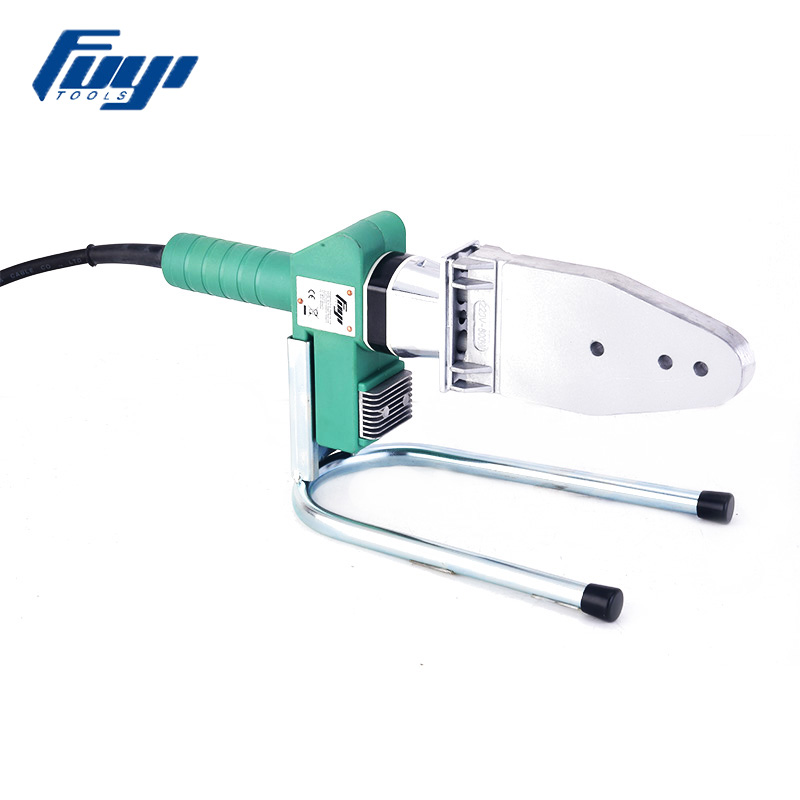
The heating plate
A machined aluminium plate, usually PTFE coated on both faces so that molten plastic releases cleanly without tearing the weld surface. Plate flatness and coating condition matter more than most operators realise: a scratched or carbonised plate will pull material away from the joint and leave a weak, uneven weld bead.
The heating dies
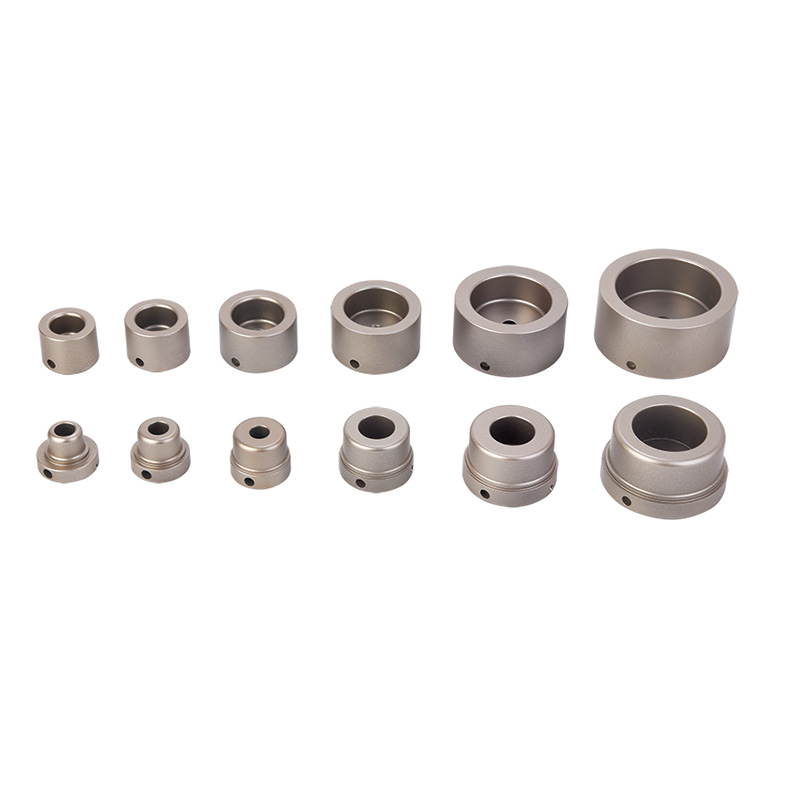
Pairs of sleeves and bushings sized to the pipe outside diameter. The bushing forms the socket side, the sleeve forms the spigot side. A machine is only as versatile as its die set, which is why die availability in both metric and inch sizes should be part of your buying decision.
The temperature controller
A thermostat with a dial, or a digital controller with a sensor embedded in the plate. This is the part that separates a hobby tool from a professional one, because unstable plate temperature produces welds that look acceptable and fail months later.
The reference setpoint for both PP-R and PE is usually around 260 °C, with the plate held steady within a narrow band while the dies are loaded. That stability, not raw heating speed, is what a good machine is really selling you.
The Five-Step Weld Cycle, Step by Step
Every leak we have ever been asked to diagnose traces back to one of these five steps being rushed. The machine only controls step four; the other four belong to the operator.
1. Cut the pipe square
Use a proper plastic pipe cutter rather than a saw. A saw leaves chips inside the bore and an angled face, and an angled face produces a weld bead that is thick on one side and thin on the other. Check squareness by eye against a flat surface before you go further.
2. Mark the insertion depth
Every fitting has a socket depth. Mark it on the pipe with a pencil or a depth gauge so you can confirm full insertion later. A pipe that stops short leaves an internal gap that collects debris and eventually weeps.
3. Prepare the surface
Wipe off dust, water and oil. For PE and HDPE, scrape away the oxidised outer layer with a dedicated scraper, because that layer will not fuse no matter how hot the plate is. For PP-R, a light clean plus a chamfer on the pipe end is normally enough. Chamfering prevents the leading edge from pushing molten material ahead of it like a snowplough.
4. Heat both surfaces at the same time
Push the pipe into the sleeve and the fitting over the bushing in one movement, and hold both without twisting. Heating time is set by diameter and wall thickness from your welding table, not by feel. A useful field check is that both surfaces should show a uniform molten ring when you pull them off.
5. Join and cool without disturbance
Remove both parts, push them together straight and firm within a couple of seconds, hold briefly, then leave the joint completely alone. No twisting, no adjusting, no testing with a wrench. The weld needs its cooling time in peace; a joint moved while still soft will have stress lines built into it for life.
A word on timing
Heating and cooling times are published in the welding table for your pipe standard, and they scale with wall thickness rather than with outside diameter alone. Two pipes of the same outside diameter but different pressure classes need different dwell times. This is one of the most common reasons a bench machine appears to "weld badly" when in fact the operator is using a single timing rule for every job.
Constant Temperature or Digital Display?
This is the first real decision most buyers face, and it is often framed as a price question when it is really a question about who is holding the tool. Both types heat correctly. The difference is feedback and repeatability.
| Feature | Constant-temperature model | Digital display model |
|---|---|---|
| Temperature setting | Analogue dial with fixed stop | Push-button setpoint |
| Readout | None, indicator light only | LED or LCD showing live plate temperature |
| Typical working range | 20-32 mm up to 63 mm or 110 mm | 20 mm up to 200 mm |
| Best suited to | Repetitive small-bore work, repair kits, crews who want simplicity | Mixed-diameter projects, quality documentation, training sites |
| Recovery after heavy use | Depends on mass of plate and thermostat hysteresis | Visible on screen, so the operator can wait for recovery |
| Price band | Lower | Higher |
Where constant-temperature machines still win
A thermostat-controlled machine with a well-made plate is not an inferior tool; it is a different tool. It has fewer parts to break, nothing to misread in bright sunlight, and a warm-up behaviour that experienced hands learn to trust. For a crew welding 20 mm and 25 mm PP-R all day, a compact constant-temperature unit is often the fastest thing on site.
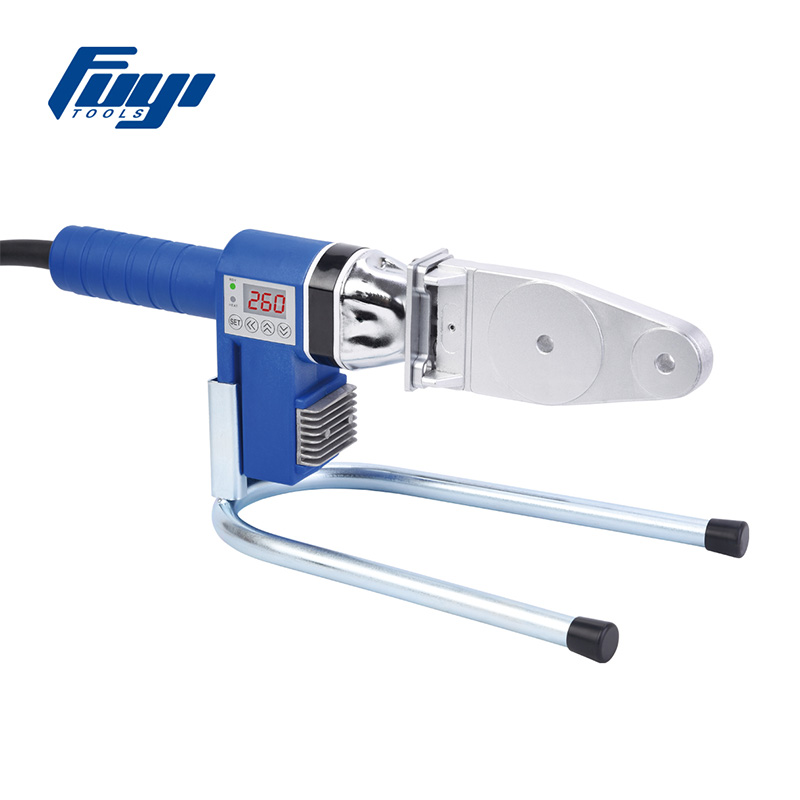
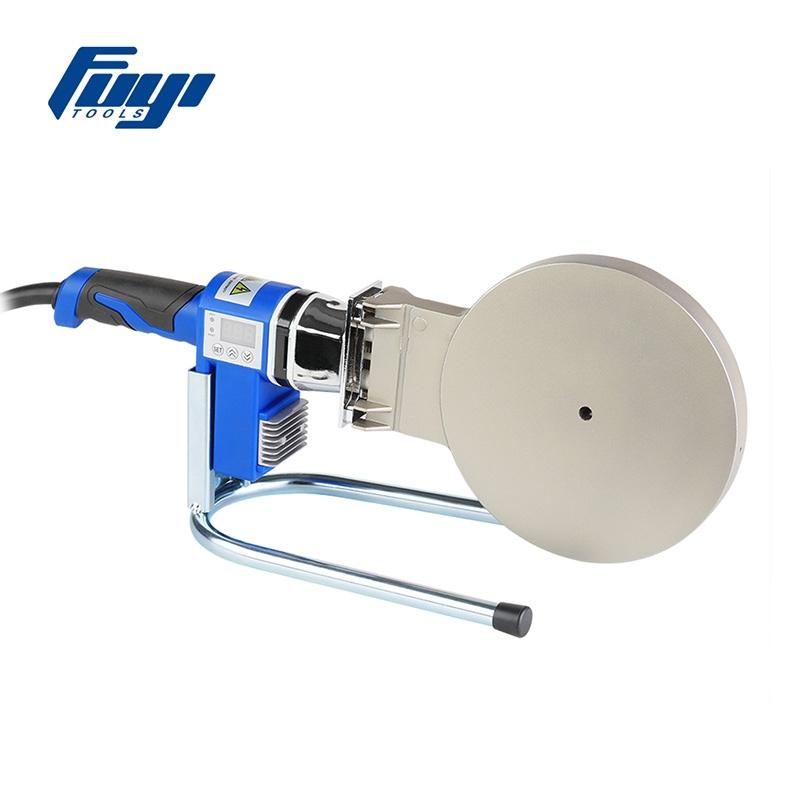
 FYF110 Constant Temperature Socket Fusion WelderThe FYF110 is a 260°C constant-temperature socket fusion welder with 75, 90 and 110 mm sockets, 1200 W and 110/220 V operation for PP-R.View Product →
Where digital pays for itself
The moment you move into mixed diameters, or into work where someone may ask for evidence of process control, a digital readout changes the conversation. The operator can see the plate drop when a cold fitting lands on it, and can wait the extra seconds instead of guessing. On 110 mm and above, those extra seconds are the difference between a weld and a rework.
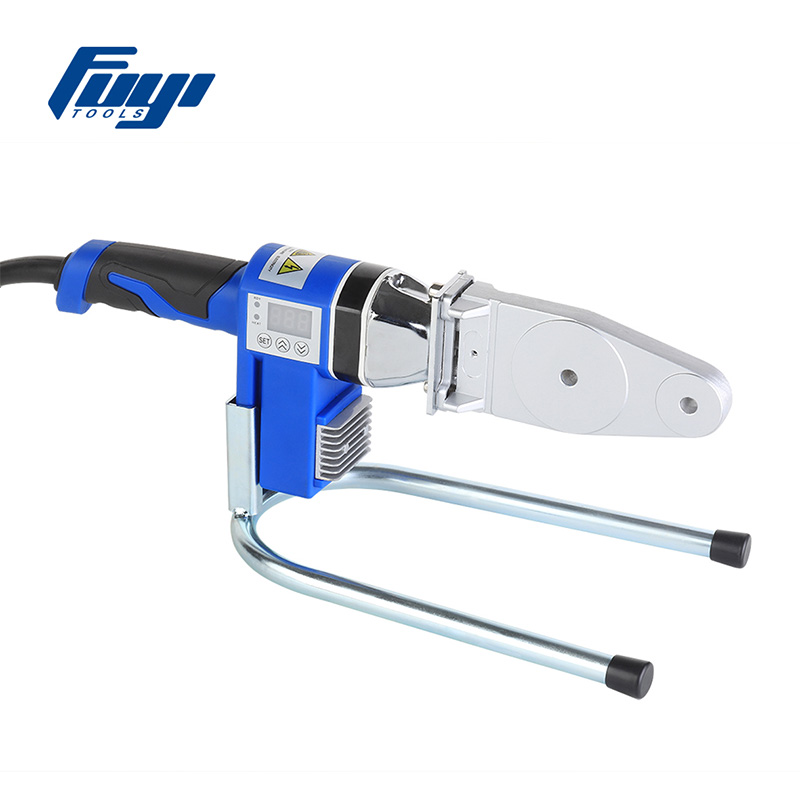
 FYD63 Digital Socket Fusion Welding MachineA 20–63 mm digital socket fusion welder for PP-R/PB/PE/PVDF, with LED temperature display, 800 W and flexible socket sizing.View Product →
Matching the Machine to Your Pipe Range
Buy for the work you will actually do next year, not for the single diameter in front of you today. A machine rated to 32 mm costs less, but if your next project includes a 63 mm riser you will be renting equipment or turning work away.
Heating time rises faster than diameter, which is why larger machines need more power and sturdier plates. The chart below shows the general shape of that curve using published heating times from common welding tables; always confirm exact values against the table for your pipe standard.
20 mm~5 s
32 mm~8 s
63 mm~24 s
110 mm~50 s
160 mm~80 s
A practical rule we pass on to customers is to buy one size above your current biggest job. It costs a little more at the counter and saves a great deal at the site gate. If you want to compare the whole spread in one place, you can review the full range of socket fusion welding machines by diameter and control type before narrowing down.
- 20-63 mm: the workhorse band for building services, bathroom risers, small plant rooms and repair work.
- 75-110 mm: larger distribution pipework, where plate power and die stability start to matter more than portability.
- 110-200 mm: heavy-duty work where a machine is usually paired with a bench or a frame, and where heating time alone dictates the rhythm of the day.
Material Matters More Than the Label on the Box
The plate temperature may be similar across materials, but the surface preparation is not. This is where many perfectly good machines get blamed for failures caused by preparation.
PP-R
Forgiving material for socket fusion: clean the end, chamfer it, heat and join. The molten ring should be even and continuous. PP-R is the material most small-bore machines are built around, and it tolerates short delays in joining better than PE does.
PE and HDPE
Less forgiving. The outer oxidised skin must be scraped off before heating, and the join must happen quickly and without rotation. PE also punishes cold plates: a plate that has dropped below setpoint will produce a joint that looks fine and fails under pressure testing.
PVDF and PB
Higher-value materials with their own temperature windows. Confirm the exact setpoint and dwell times with the pipe manufacturer, and use dies that are in good condition. Scratched dies leave marks that become crack initiation points in rigid materials.
Mixed material joints
Do not assume two visually similar pipes will fuse. Different grades and fillers can produce a joint with no real molecular bond. If the specification does not explicitly permit the combination, it does not exist.
Bench, Portable and Handheld Formats
Handheld
One-piece or lightweight two-piece sets, typically up to 63 mm. Ideal for service work, risers, tight plant rooms and call-out vans where the machine has to be carried up stairs several times a day.
Bench-mounted
The machine is fixed and the pipe is presented to it. Better ergonomics for repetitive cutting and prefabrication, more stable heating, and a much easier way to keep a consistent rhythm across hundreds of joints.
Portable with frame
Heavier units, often 110 mm and above, carried in a frame or case with a stand. These are site machines rather than van machines, and they benefit from being set up once and left in place.
Bench work is where we see the biggest quality gains for workshops doing prefabricated bathroom pods or skid assemblies. When the machine does not move and the dies stay level, the operator's hands are free to control insertion depth and alignment instead of fighting gravity.
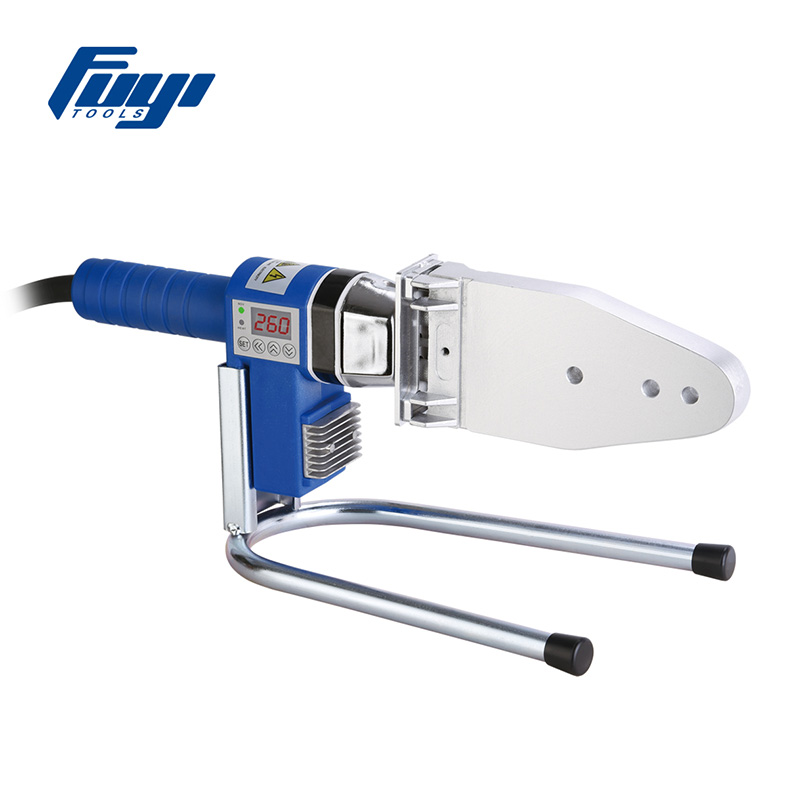
 Bench Socket Fusion Welding Machine with ElevatorA bench-style 32–160 mm socket fusion welder with elevator, pipe holder and D75–D160 sockets; 1800 W for stable PP-R/HDPE/PB/PP joints.View Product →
The Tools Around the Machine Decide the Weld
A machine by itself cannot make a good joint. The preparation tools are not accessories in the sense of optional extras; they are part of the welding process, and skipping them is the single most common cause of callbacks.
Pipe cutters
Ratchet, rotary and shear types, matched to diameter. A clean, square cut removes half of the alignment problems before they happen.
Chamfering tools
Metric and inch versions, so the bevel matches the pipe standard in the market you serve. A chamfer that is too deep thins the fusion zone; one that is too shallow catches on the socket.
Scrapers
Essential for PE. A proper pipe scraper removes the oxidation layer evenly around the full circumference, which a knife never does.
Cold ring pliers
Used in electrofusion work for holding and stabilising fittings during the cooling phase, available in metric and inch versions.
Sockets, spigots and saddles
The fitting side of the joint. Black and grey sockets, spigot fittings and weld-in saddle sockets all need the same care in storage: dust and grit on a socket wall will end up inside the weld.
Repair sockets
For patching damaged sections without cutting out a full run. Useful, but a repair weld deserves the same preparation discipline as a new one.
Common Mistakes, Answered Plainly
Why does my weld bead look uneven?
Usually misalignment rather than temperature. The pipe went in at an angle, or the fitting was rotated during insertion. Check that the dies are clean and that you are pushing straight in one movement.
Why do joints pass a pressure test and then weep later?
Classic cold-weld behaviour. The plate had not recovered to setpoint, or the pipe was heated but the fitting was not. The joint holds initially and creeps under sustained pressure. A digital readout catches this before it happens.
Can I use one machine for every wall thickness?
The machine, yes. The timing, no. Heating and cooling times depend on wall thickness, so a single timing rule across different pressure classes will produce inconsistent results.
How often should dies be replaced?
When the coating is worn through, when the bore is scratched, or when molten plastic starts sticking and tearing. A die that tears material off the pipe is costing you welds, not saving you money.
Is a hotter plate faster?
No. Above the specified setpoint the polymer degrades, the melt becomes thin and the joint loses strength. Faster heating is a function of plate mass and good die contact, not a higher number on the dial.
What should I check before a shift starts?
Plate temperature, die cleanliness, cable and plug condition, and that the correct die pair is fitted for the first joint of the day. Two minutes at the start prevents an afternoon of rework.
If you want a deeper walkthrough of the joining sequence, our team has written a separate guide on best practices for a strong, leak-free weld that goes into alignment, insertion depth and cooling in more detail.
Care, Storage and Safety
Daily care
- Wipe the plate while warm, never while cold and crusted.
- Store dies in a cloth bag, not loose in a metal box.
- Coil the cable loosely; a sharp bend at the gland is the most common electrical failure we see.
- Check the plug and earth connection before connecting to site power.
Safety basics
- The plate runs at around 260 °C and looks identical to a cold plate. Treat it as hot until proven otherwise.
- Wear heat-resistant gloves for die changes.
- Keep the machine on a stable surface; a plate that falls with a fitting attached usually needs replacing.
- Let the machine cool fully before packing it away.
A Short Buying Checklist
- List the diameters you will weld in the next twelve months, then add one size.
- Decide between analogue simplicity and digital feedback based on who will hold the tool.
- Confirm die availability in both metric and inch sizes for your market.
- Check that the plate is coated and that replacement dies are stocked locally or by the manufacturer.
- Ask what the plate recovery behaviour is when a cold fitting is loaded.
- Look at the case and cable strain relief, not just the machine body.
- Buy the preparation tools at the same time; a machine without a cutter, chamfer tool and scraper is half a kit.
Our Honest View
We have been building pipe welding equipment in Xiaoshan for sixteen years, and the most useful thing we can tell you is that the machine is rarely the weak link. In the vast majority of problem cases that reach our workshop, the tool arrives in good order and the fault sits upstream: an unmarked insertion depth, a scraper left in the van, a plate that was never checked because nobody could see the number. That is why we keep pushing digital feedback into smaller and cheaper models, even though analogue machines are easier to sell. A temperature the operator can see is a weld that can be argued about and corrected; a temperature hidden behind a dial is a guess that gets repeated all week.
The second thing we have learned is that die quality is quietly underrated. On a project in northern Mexico, a contractor was convinced his machine had lost power because welds on 63 mm PE were tearing at the bead. The plate was fine. The dies had been cleaned with a metal scraper for two seasons and the coating was gone, so every joint came off with material stuck to the sleeve. New dies and a cloth solved a problem that had been blamed on the machine for months. We now ship spare dies in the case wherever we can.
Finally, we would rather sell you the right size than the biggest one. A 200 mm machine sitting in a van that only ever welds 32 mm PP-R is a heavy, expensive way to slow a crew down. Tell us what you actually install, how often, and who is holding the tool, and we will tell you honestly when a smaller unit will do the job better. That approach has kept our customers with us far longer than any specification sheet ever has.
Related Products

 +86-158 6813 9123
 +86-571- 82432777
 selena.zhong@fuyitools.com
 No.7 Yangguang Road, Linpu Industrial Area, Hangzhou City, Zhejiang Province, China
Copyright © 2024 Hangzhou Fuyi Tools Co., Ltd. All Rights Reserved.
|
