

 Eng
 русский
 Español
Home / News / Industry News / Fusing Machines Explained: A Practical Socket and Electrofusion Guide for Pipe Pros
Industry News
Nov 09,2026
Fusing Machines Explained: A Practical Socket and Electrofusion Guide for Pipe Pros
A fusing machine does something deceptively simple: it heats two plastic surfaces until they soften and melt, then lets them cool into one continuous piece. When the parameters are right, the joint ends up stronger than the pipe wall on either side of it. When they are wrong, it becomes a leak that shows up months later, usually under a floor slab or inside a wall.
That is why we treat fusing machines as process equipment rather than as ordinary power tools. Over the past sixteen years we have designed and manufactured socket fusion machines, electrofusion machines, and the hand tools that support them, shipping them to contractors, distributors, and importers across Europe, Russia, North America, Latin America, and Asia. This guide gathers what we have learned about how these machines work, where each type fits, and what to check before you buy.
Whether you are quoting a small plumbing job or specifying equipment for a buried PE main, the same questions come up again and again: which fusion method, which machine size, which accessories, and how do you keep quality consistent across a team of installers? Let us walk through it.
16years of export experience behind our machines
20-315 mmpipe outside diameters covered by our range
2fusion methods supported: socket and electrofusion
Metric + Inchtool and fitting standards we manufacture to
What "Fusing Machines" Actually Covers
In everyday language, fusing machines can mean anything from a hand-held heating iron to a trailer-mounted butt fusion rig. In our own catalogue the term covers four practical groups, and knowing which group you are shopping in saves a surprising amount of confusion when you compare quotations from different suppliers.
Constant Temperature Socket Fusion Machines
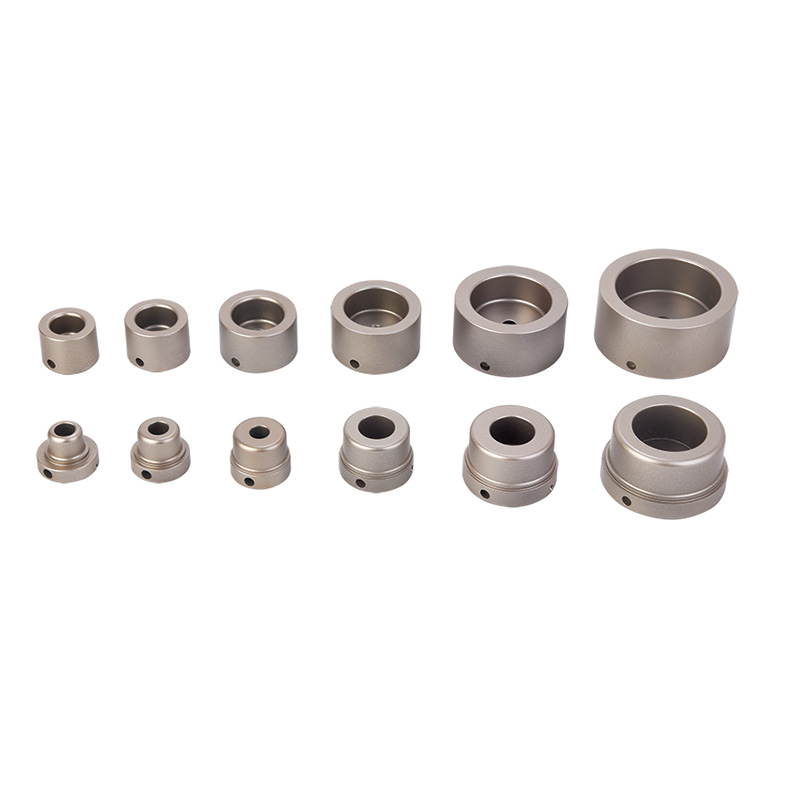
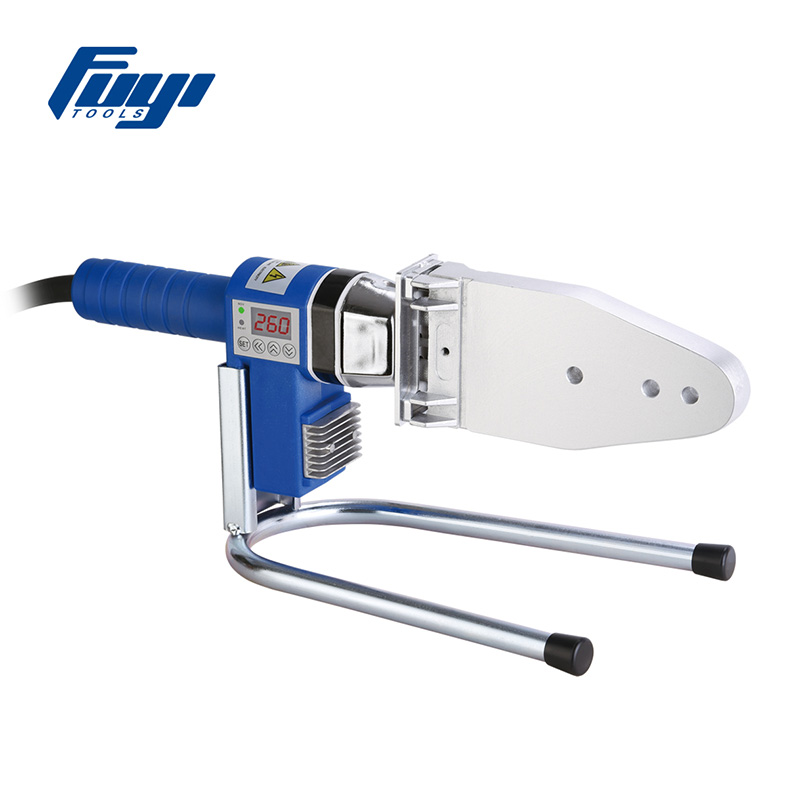
A fixed thermostat holds the heating tool at the working temperature. Few knobs, tough construction, and the models in our range typically cover pipe outside diameters from 20 mm up to 110 mm.
Digital Socket Fusion Machines
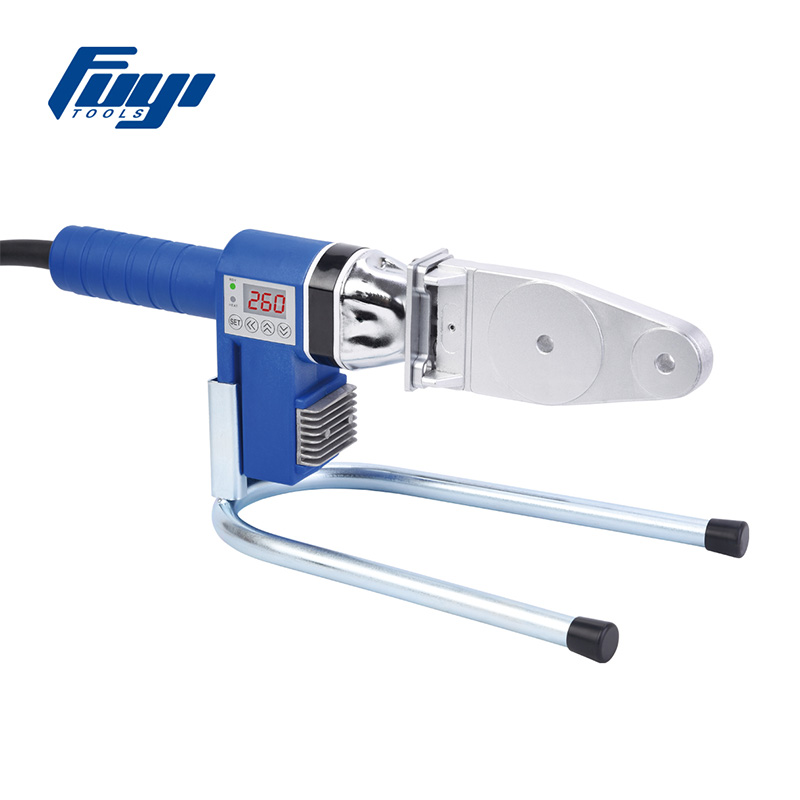
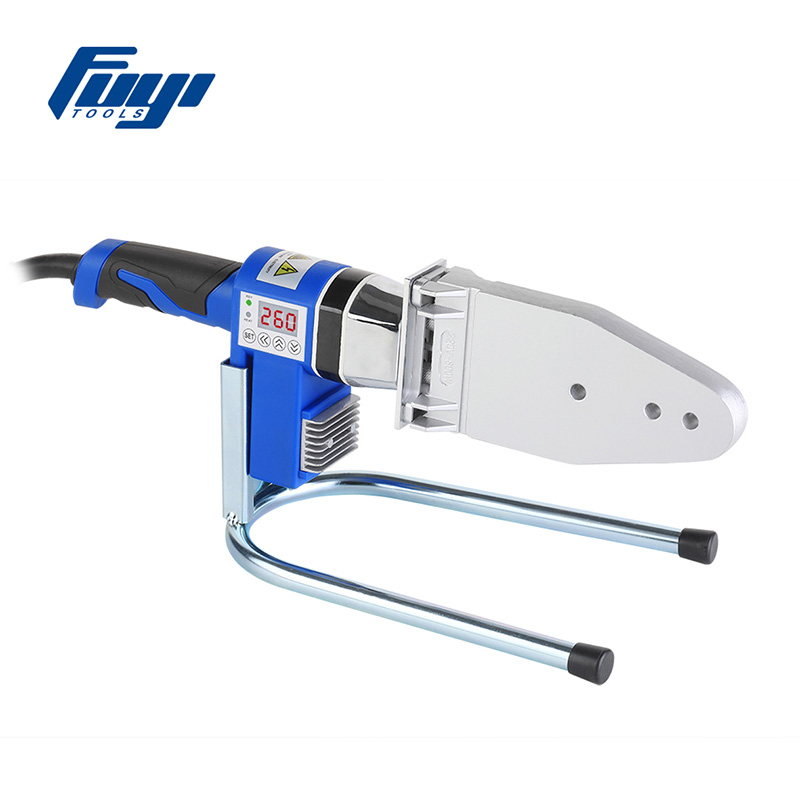
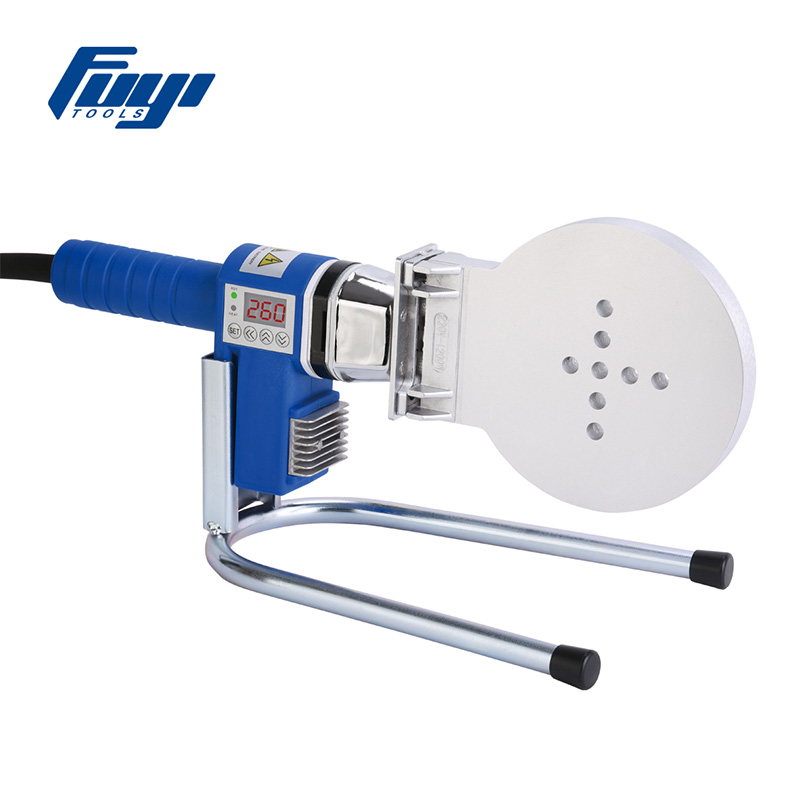
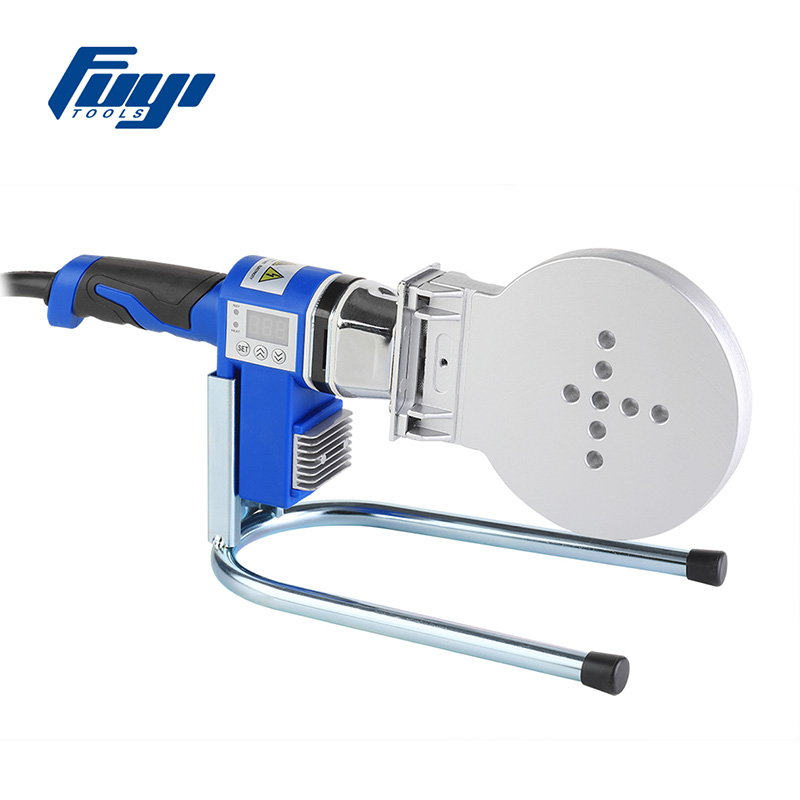
An LED or LCD window shows the actual temperature, so an installer can confirm the setting instead of trusting it. Our digital models stretch from 20 mm up to 200 mm.
Electrofusion Machines
These energise the resistance wire moulded inside an electrofusion fitting. We build both transformer style and inverter style units, covering fittings from small diameters up to 315 mm pipe.
Bench and Workshop Machines
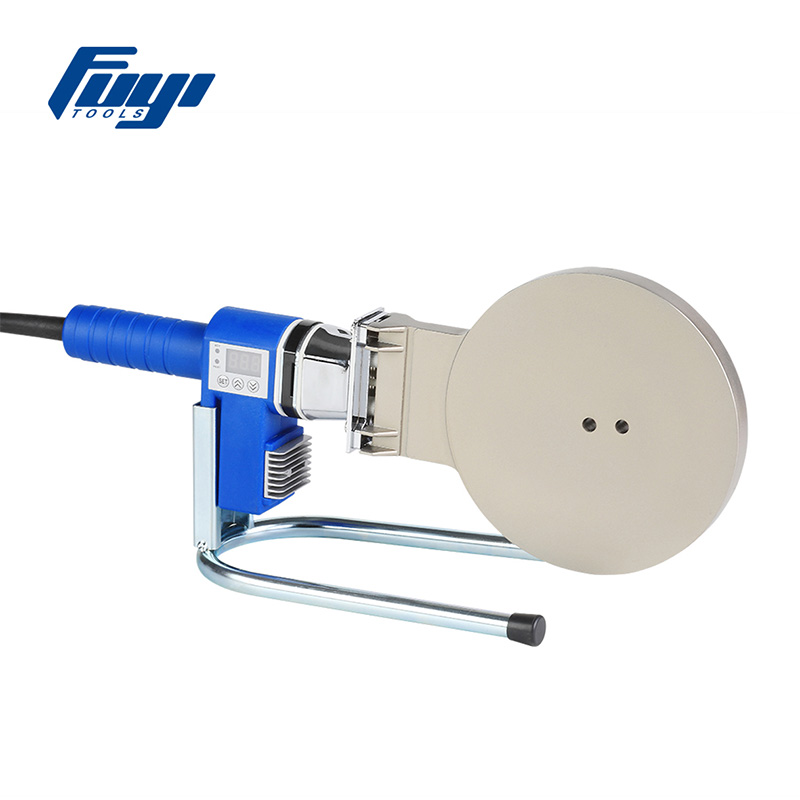
Mounted on a worktable rather than carried to the pipe, these are used for prefabricating spools, repeated small components, and training.
The bench group deserves a special mention because it is so often overlooked. A bench socket fusion welding machine lets a fabricator build identical assemblies on a jig, away from the noise and dust of a live site, and then carry the finished spool to the installation point. For repeat work such as riser assemblies or manifold sets, it usually pays for itself in consistency alone.
Butt fusion, where two pipe ends are faced off and pressed against a heated plate, is a third family that we do not currently manufacture. If your project involves large-diameter HDPE mains, it is worth knowing the term exists so that you can ask the right questions of any supplier who offers it alongside socket and electrofusion equipment.
The Fusion Cycle, Step by Step
Every joint, whether it is a 20 mm PP-R elbow in a bathroom wall or a 250 mm PE tee in a water main, follows the same basic sequence. The machines change, the tools change, the timing changes, but the logic does not. When a weld fails, it is almost always one of these steps that was rushed.
1. Cut the pipe square
A crooked cut means an uneven insertion, which means an uneven melt. Rotary cutters and ratcheting cutters do this job far more reliably than a hand saw, and they leave no plastic shavings inside the bore.
2. Chamfer and deburr the end
A chamfered pipe end slides into the fitting without scraping molten material ahead of it. Metric and inch chamfering tools exist precisely because pipe standards differ between markets.
3. Mark the insertion depth
Every fitting has a specified insertion depth. A measuring pad or a simple pencil mark removes the guesswork and stops installers from pushing the pipe in too far or not far enough.
4. Clean or scrape the surface
PE and many polyolefin surfaces carry an oxidised layer that will not fuse properly. Scraping or peeling the outer skin is mandatory before electrofusion and is good practice before socket fusion on larger diameters.
5. Heat both surfaces
The pipe outside and the fitting inside are heated on the same die at the same time. Temperature, not time, is the controlled variable here, which is why a stable heating tool matters so much.
6. Join in one smooth movement
Pull the pipe and fitting off the die and push them together straight, without twisting. Rotation during joining disturbs the melt front and creates a weak line through the joint.
7. Hold, then cool
Hold the joint still for the specified time, then leave it alone. Cooling is part of welding, not a waiting period before work resumes. Moving a warm joint is one of the most common ways to ruin an otherwise perfect weld.
8. Inspect the result
Look at the weld bead. A uniform ring on both sides of the fitting shoulder, with no gaps, cracks, or signs of over-insertion, tells you the process behaved as it should.
If you take one thing from this list, let it be step seven. We have seen installers with excellent technique and well-maintained machines lose joints simply because someone leaned on a warm spool to reach a tool bag.
Socket Fusion or Electrofusion: Which Route Fits the Job
The two methods produce the same kind of permanent joint, but they get there in different ways. Socket fusion heats from the outside in, using a heating tool that touches both the pipe and the fitting. Electrofusion heats from the inside out, passing current through a wire coil embedded in the fitting itself.
| Aspect | Socket Fusion | Electrofusion |
|---|---|---|
| Source of heat | External heating tool with dies | Wire coil inside the fitting |
| Typical pipe range | 20 mm to 160 mm | 20 mm to 315 mm |
| Power demand | Lower, often around 600 W to 1200 W | Higher output, transformer or inverter |
| Cost per joint | Lower fitting cost | Higher fitting cost |
| Main quality driver | Operator timing and technique | Machine parameters and fitting data |
| Works well in | Open trenches, risers, indoor plumbing | Tight trenches, large diameters, repairs |
| Skill needed | Moderate, easy to teach | Moderate, but more parameter discipline |
| Typical first choice for | PP-R water and heating systems | Buried PE mains and distribution networks |
There is no universal winner. A plumbing contractor running 32 mm PP-R risers indoors will almost always choose socket fusion because the fittings are cheap, the machine is light, and the joint is quick. A utility crew connecting a 225 mm PE branch to a live main will choose electrofusion because it needs less clearance around the pipe and the parameters are recorded by the fitting itself.
Upper pipe outside diameter covered by typical machine groups in our range
Hand-held constant temperature
63 mm
Digital socket fusion
200 mm
Bench socket fusion
63 mm
Transformer electrofusion
200 mm
Inverter electrofusion
315 mm
Bars show the largest pipe diameter each machine group is designed to work with, not a recommendation to weld at the limit all day.
A practical note on the top of each range: welding constantly at a machine's maximum diameter is harder on the heating element and on the operator. If most of your work sits near the ceiling of a model's capability, moving up one size usually gives you a cooler-running machine and a longer service life.
Temperature Control: The Quiet Difference Between a Good Weld and a Callback
Almost every failure mode we hear about from the field traces back to temperature. Not the setting on the dial, but what the heating tool actually does while the installer is working, hour after hour, in cold weather or on a generator with unstable voltage.
Why stable heat matters
Polyolefins have a narrow window between "not melted enough" and "degraded". Below the window, the polymer chains do not interdiffuse and the joint is weak from day one. Above it, the material oxidises and the weld becomes brittle. A heating tool that drifts by ten or fifteen degrees can move you from one failure mode to the other without any visible warning on site.
What to look for on the machine
A heating element with a genuinely stable control loop, a body that does not overheat during long runs, dies that seat cleanly on the tool, and a power lead long enough to reach the work without an extension draped across a wet floor. On digital models, a clear temperature readout that an installer can see at arm's length.
A weld is a heat recipe, not a power setting. The dial position is only useful if the tool actually reaches and holds that temperature.
This is one of the reasons we put so much effort into the temperature control system on our socket fusion machines. It is not a glamorous feature and it does not photograph well, but customers who have run cheaper equipment tend to notice the difference in the first week, particularly when they are welding continuously rather than in short bursts.
Choosing a Fusing Machine for Your Project
Before you compare prices, write down the answers to these questions. In our experience, most unhappy purchases come from skipping one of them rather than from paying too much or too little.
- Pipe material. PP-R, PE-HD, PP, PVDF, and PB all have their own recommended parameters. Confirm what your team actually installs.
- Diameter range. Look at the next twelve months, not just today's job. Buying for the biggest contract you expect is usually cheaper than buying twice.
- Method. Socket fusion, electrofusion, or both. Many contractors end up with one of each.
- Power availability. Single-phase mains, site generator, or long cable runs. Voltage quality matters as much as voltage level.
- Documentation needs. If your client asks for weld records, a machine with a visible digital temperature display makes that conversation much easier.
- Die and fitting standards. Metric for most of Europe and Asia, inch for other markets. Confirm that the dies you need are available.
- Support and spares. Heating elements, thermostats, and dies are wear items. Ask how quickly they can be replaced.
If your work sits in the middle of the range, a digital socket fusion machine is often the most flexible single purchase, because it covers small domestic joints and medium distribution pipe with the same tool. If you want a worked example of matching a specific model to a specific job, our team wrote a longer piece on choosing the right digital socket fusion machine for your project, including the questions worth asking a supplier before you commit.
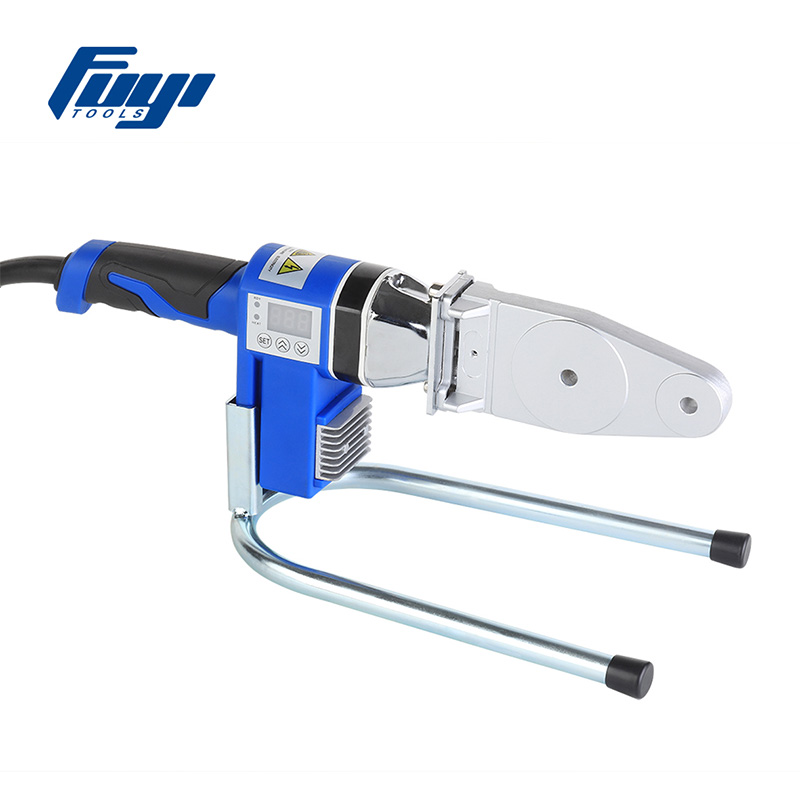
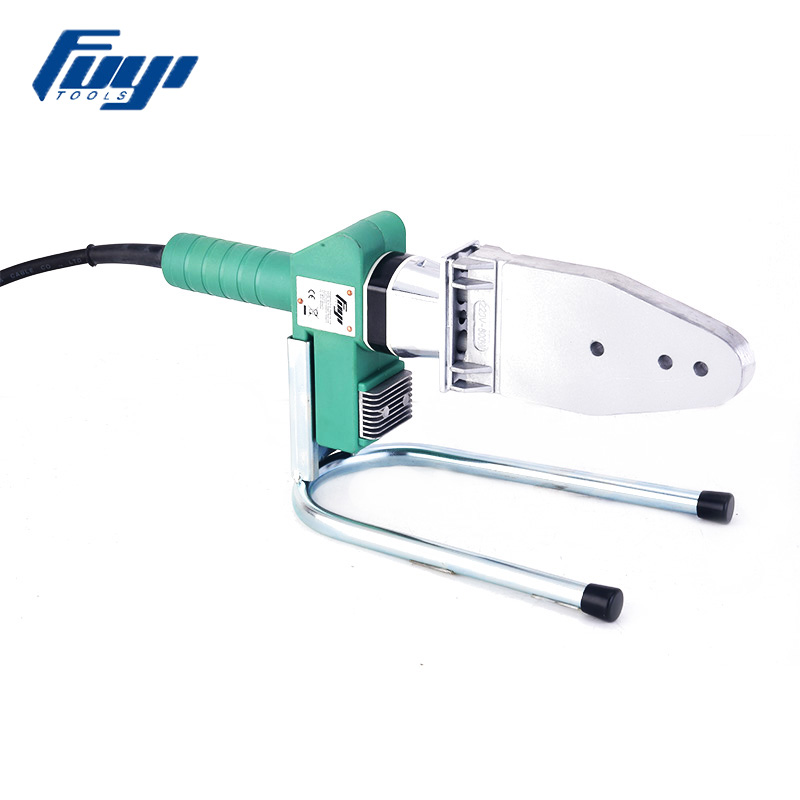
A model that suits a great many contractors is the FYD63, a 63 mm digital socket fusion machine with an LED window temperature display. It covers the 20 mm to 63 mm band that dominates domestic and light commercial plumbing, shows the working temperature at a glance, and is light enough to carry up a ladder without a second trip.
 FYD63 63mm Digital Socket Fusion Welding MachineCovers 20–63 mm PPR pipe connections with LED temperature display, digital control, and a portable design suited to domestic and light commercial plumbing.View Product →
If your work regularly goes above 110 mm, the deciding factor shifts from the machine to the method. Above roughly 160 mm, electrofusion generally becomes the more practical choice, and the conversation turns to power output and fitting availability rather than portability.
The Tools Around the Machine: Where Most Weld Problems Start
An installer can own an excellent fusing machine and still produce mediocre joints, because the weld is only as good as the preparation in front of it. The tools that surround the machine are not accessories in the decorative sense. They are the quality control system.
Pipe cutters
Rotary, ratcheting, and heavy-duty shears for square cuts without deformation or swarf inside the bore.
Chamfering tools
Metric and inch versions that take the sharp edge off the pipe end so it enters the fitting cleanly.
Electrofusion scrapers
Remove the oxidised outer layer that would otherwise sit between the pipe and the molten fitting surface.
Cold ring pliers
Metric and inch versions used when working with cold ring fittings and related assembly steps.
Repairing sockets
For patching damaged or leaking sections of an existing line without replacing a full pipe run.
Hole saws and measuring pads
Branch connections and consistent insertion depth marking, two small jobs that cause outsized problems when done badly.
Two of these tools earn their place on every job, regardless of the pipe size. A good cutter and a good scraper between them prevent more failures than any single machine upgrade.
 Electrofusion Pipe Scraper for PP-R and PE PipesPrepares pipe surfaces up to Ø400 mm by removing dirt and oxide layers before electrofusion, helping create consistent, reliable joints in PP-R/PE pipelines.View Product →
Scraping is the step installers most often skip, usually because it feels like extra work on a hot afternoon. It is also the step that most reliably separates a joint that passes a pressure test today from one that still holds in five years. A scraper that fits the pipe properly and removes a consistent shaving takes seconds per joint.
 FYC-110 Ratchet Plastic Pipe CutterRatchet-action cutter for PVC, aluminum, and plastic pipes, with a 3–75 mm range and compact design for precise, smooth cutting on various jobs.View Product →
On the cutting side, a ratcheting cutter is worth the extra cost as soon as you move past small diameters, because it lets the operator keep the blade square rather than forcing it through. Deformed pipe ends are a hidden source of ovality, and ovality is what turns a straightforward socket weld into a fight.
Matching the Machine to the Material and the Site
The same machine can behave very differently depending on what is running through the pipe and where the pipe is being installed. The table below is a starting point for those conversations, not a substitute for the fitting manufacturer's own parameters.
| Material | Common application | Usual method | Practical notes |
|---|---|---|---|
| PP-R | Domestic hot and cold water, heating | Socket fusion | Most work sits between 20 mm and 63 mm |
| PE-HD | Water mains, irrigation, distribution | Electrofusion | Surface scraping is essential before welding |
| PP | Industrial and process lines | Socket fusion | Check chemical compatibility of the medium |
| PVDF and PB | Specialty and high-temperature lines | Socket fusion | Narrow temperature window, digital machine preferred |
| Any of the above | Repair of an existing line | Electrofusion or repair sockets | Often faster than cutting out a full pipe section |
Site conditions matter just as much as material. Wind pulls heat away from a heating tool and makes an open trench a genuinely difficult place to hold a temperature. Rain and dust get onto prepared surfaces. Voltage sags when a compressor starts on the same supply. None of these are reasons to abandon a method, but they are reasons to choose a machine with a bit of headroom and to train the crew on what to do when conditions turn.
One habit we recommend to every installation team: weld a test joint at the start of each shift, cut it open, and look at the melt pattern. It takes five minutes and it catches a drifting thermostat, a damaged die, or a new installer's technique before it becomes somebody's flooded basement.
From Workshop to Port: How These Machines Are Made and Shipped
We manufacture in the Linpu Industrial Zone in Xiaoshan, Hangzhou, about thirty minutes from Xiaoshan Airport and within easy reach of both the Ningbo and Shanghai ports. That geography is not an accident. Most of the machines we build leave the country, and being close to the ports keeps delivery times predictable for the distributors and importers who buy from us.
What we build
- Constant temperature and digital socket fusion machines
- Bench socket fusion machines
- Transformer and inverter electrofusion machines
- Tools for electrofusion work, including scrapers and large cutters
- Cutters, chamfering tools, cold ring pliers, hole saws, measuring pads
- Sockets, spigots, saddle sockets, and repairing sockets
How we work with buyers
- Customized service for OEM and ODM requirements
- Metric and inch specifications for different markets
- Product documentation available for download
- Factory information and certificates published for review
- English, Russian, and Spanish language support
- Sixteen years of export order handling
Our design philosophy is fairly plain: accurate, quick, modular, and easy to use. Modular matters more than it sounds. When dies, heating elements, and handles are interchangeable across a family of machines, a distributor can stock fewer spares and an installer can replace a worn part without sending the whole tool back. It also means a machine bought for one diameter range can be extended later rather than replaced.
We describe our goal in a way that some marketing departments would probably soften, but we prefer to keep it direct: if a tool helps a professional finish the job quickly, comfortably, and profitably, and get home on time, then it was built the right way. That standard sits behind every machine that leaves the workshop.
Frequently Asked Questions About Fusing Machines
What is the difference between a fusing machine and a welding machine?
In plastic pipe work the two terms describe the same equipment. Fusing is simply the industry's way of describing the melting and joining of thermoplastic pipe and fittings, so a fusing machine and a plastic pipe welding machine are the same tool.
What size machine do I need for 63 mm PP-R pipe?
A machine with a 20 mm to 63 mm working range covers that diameter comfortably. If you also expect work up to 110 mm, look at a model such as the FYF110 or a digital unit in the same family so you are not buying twice within a year.
Can I use a socket fusion machine on PE pipe?
Yes, socket fusion is used on PE pipe within the diameter range the machine supports. Preparation matters more than with PP-R, because PE develops an oxidised surface layer that must be removed before heating.
How long should I hold a joint before releasing it?
It depends on diameter and wall thickness, and the figures come from the fitting or pipe manufacturer's parameters. The rule that never changes is that cooling is part of the weld, so the joint should be left undisturbed for the full cooling time, not just the holding time.
Do I need different dies for metric and inch pipe?
Yes. Nominal sizes look similar but the actual outside diameters differ, so metric and inch systems use different dies and different chamfering tools. We manufacture both versions for this reason.
Is electrofusion better than socket fusion?
Neither is universally better. Electrofusion offers advantages for large diameters, buried mains, and confined trenches. Socket fusion is usually faster and cheaper for small and medium diameter indoor work. Many contractors keep one of each.
Fusing machines are one of the few pieces of construction equipment where the operator's habits matter as much as the tool's specification. A well-built machine with stable temperature control gives a good installer the consistency they need, and gives a less experienced installer a margin for error while they learn. That combination is what keeps joints holding for decades rather than seasons.
If you are selecting equipment for a project, the most useful thing you can do is start from the pipe: material, diameter, method, and site conditions. Everything else, from power output to die availability, follows from those four answers. And if you would like a second opinion on a specific configuration, our team is glad to talk it through with the actual numbers in front of us.
Related Products

 +86-158 6813 9123
 +86-571- 82432777
 selena.zhong@fuyitools.com
 No.7 Yangguang Road, Linpu Industrial Area, Hangzhou City, Zhejiang Province, China
Copyright © 2024 Hangzhou Fuyi Tools Co., Ltd. All Rights Reserved.
|
