

 Eng
 русский
 Español
Home / News / Industry News / Flame-Retardant Polypropylene: Additives, Ratings and Welding Practice
Industry News
Nov 02,2026
Flame-Retardant Polypropylene: Additives, Ratings and Welding Practice
Flame-retardant polypropylene is what you get when you take one of the most versatile, chemical-resistant and affordable thermoplastics on the market and take away its biggest weakness: it burns. On a real job site you meet this material in conduit, cable ducts, electrical housings, ventilation parts and, increasingly, in pipe and fitting systems where fire performance is written into the specification.
We build fusion welding equipment for PP-R and PE pipe, so we spend a lot of time watching how different polypropylene grades behave under heat. Flame-retardant grades do not behave like the unfilled material most installers are used to, and that difference is worth understanding before anyone turns a temperature dial.
Why Polypropylene Needs Flame Retardants
Polypropylene has a limiting oxygen index of roughly 18 percent. Since ordinary air contains about 21 percent oxygen, plain PP has no trouble at all sustaining a flame in normal conditions. It also burns with heavy dripping and leaves almost no char, which means the molten material can carry fire downwards and sideways. Unfilled PP usually lands somewhere around HB or V-2 in a UL 94 test; reaching V-0 normally requires additives.
That is why flame-retardant polypropylene exists as a separate family of compounds. It shows up in electrical and electronic components, connectors and appliance parts, cable protection, battery housings for e-mobility, under-bonnet automotive parts and construction profiles. It is worth being precise here: a PP-R drinking water pipe is normally not flame-retardant, because the fluid inside handles the fire load. The FR grades tend to appear in conduit, ducts, cladding and similar parts where the plastic itself is exposed.
The Main Flame-Retardant Systems for PP
There is no single answer to how PP is made fire-resistant. Different chemistries attack the problem in different phases of combustion, and most commercial compounds combine two or three of them.
| System | Main mechanism | Typical loading | Practical notes |
|---|---|---|---|
| Brominated compounds with antimony trioxide | Gas-phase radical scavenging | 15-25% | Very efficient, low loading; produces smoke and corrosive gases |
| Phosphorus-based (APP, phosphinates) | Char formation in the condensed phase | 20-30% | Low smoke, works well with glass-filled grades |
| Nitrogen and melamine compounds | Gas dilution plus char promotion | 15-25% | Usually paired with phosphorus for synergy |
| Intumescent systems | Swelling char barrier | 25-35% | Excellent in thick sections; moisture sensitive |
| Mineral fillers (ATH, MDH) | Endothermic decomposition, water release | 40-60% | Inexpensive and low smoke; heavy, weakens mechanicals |
| Nanocomposites (nanoclay) | Char reinforcement | 3-5% | Rarely sufficient alone; used as a synergist |
The loading column matters more than it looks. Any of these additives replaces part of the polymer, so density goes up, impact strength usually goes down, and the melt behaves differently. A compound that reaches V-0 at 25 percent additive loading is not the same material, mechanically or thermally, as neat PP.
Halogen-Free Systems Are Where the Market Is Moving
Restrictions on brominated and chlorinated additives in electrical equipment, together with concerns about smoke corrosivity in tunnels, data centres and public buildings, have pushed development towards halogen-free solutions. Phosphorus-nitrogen and intumescent packages now dominate many product specifications, and mineral-filled grades remain popular where cost and smoke density matter most.
The trade-off is real. Halogen-free compounds generally need higher additive loading, which means higher density, lower elongation and more sensitivity to moisture. They also tend to cost more per kilogram. For a specifier, the exercise is usually to find the lowest loading that still passes the required fire test with margin, rather than to chase the highest rating available.
How Flame Retardants Change the Way FR-PP Is Welded
This is the part that surprises people. A flame-retardant PP pipe or fitting is not simply a PP part with a fire rating attached. Adding 20 to 60 percent of mineral or phosphorus-based filler changes melt viscosity, thermal conductivity and the temperature window in which the material can be safely processed.
Three consequences show up in the field. First, heat soak times often need adjusting, because filled compounds do not melt and flow in exactly the same way as unfilled PP. Second, the acceptable processing window is narrower: overheating can decompose part of the additive package, release volatile or acidic species, and leave voids or a brittle weld line. Third, moisture sensitivity is higher, so storage and drying practice matter more than they do for standard PP-R.
The practical rule is simple: never copy welding parameters from an unfilled PP-R job onto an FR grade. Ask the compound or pipe supplier for their recommended heating temperature, heating time and cooling time, then confirm those numbers with test welds before production work begins. If you want a walk-through of joint quality control, our guide to the best practices for a strong and leak-free socket fusion weld covers the same ground for standard PP systems.
Preparation Is Where Most FR-PP Joints Are Won or Lost
Flame-retardant compounds tolerate contamination poorly. Filler particles and additive residues sitting on a pipe surface will not fuse into the joint, and on electrofusion work the oxidized layer has to come off completely. Cut the pipe square with a proper cutter rather than a saw that leaves burrs, scrape the full insertion depth immediately before welding, chamfer the end so it enters the fitting without shaving material, and mark the insertion depth so you can see the pipe has not moved during heating.
Our range of plastic pipe cutters covers everything from light rotary cutters to heavy-duty ratcheting models, so you can match the tool to the wall thickness rather than forcing one cutter to do every job.
 FYETS200 and FYETS400 Electrofusion Pipe ScrapersRotary scrapers for preparing plastic pipes up to Ø400 mm before electrofusion, with adjustable chucks and an orbital blade holder arm.View Product →
Keep heater faces and scraper blades clean as well. Burnt residue from a previous weld transfers straight onto the next joint, and on filled compounds that residue builds up faster than most crews expect.
Equipment Choices That Help You Hold the Window
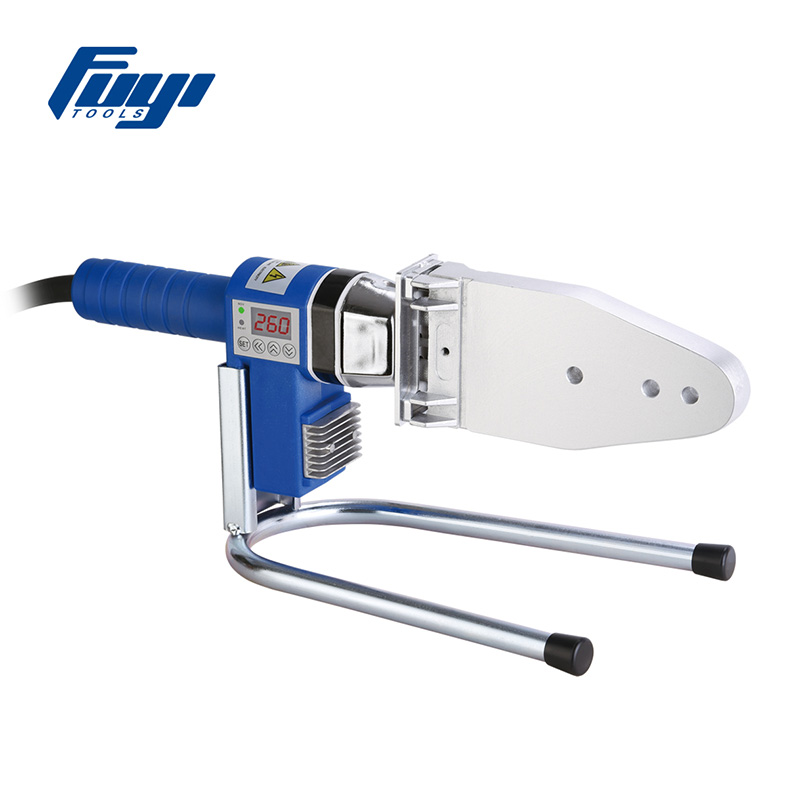
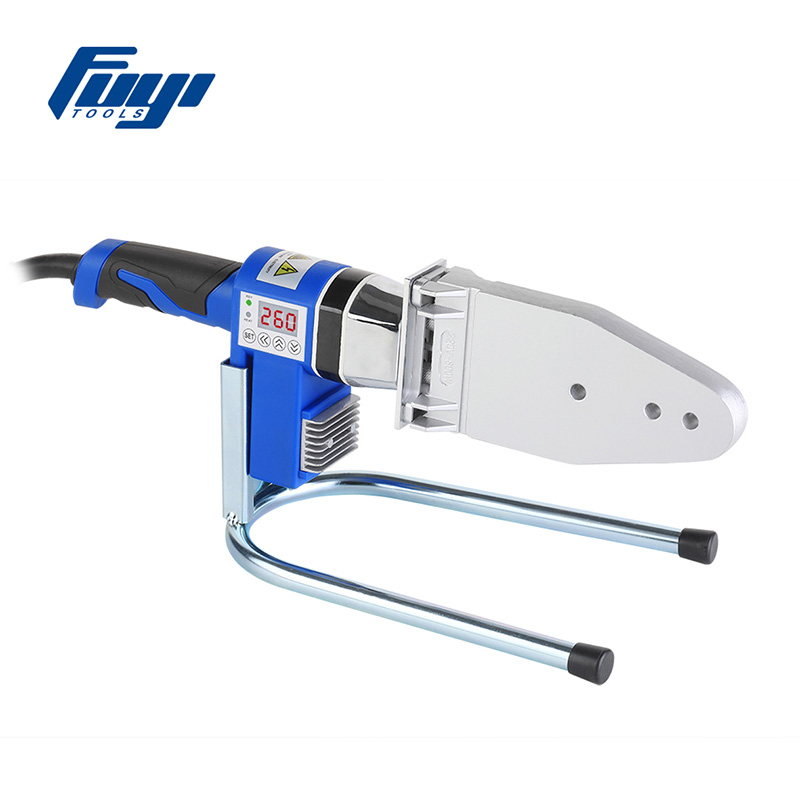
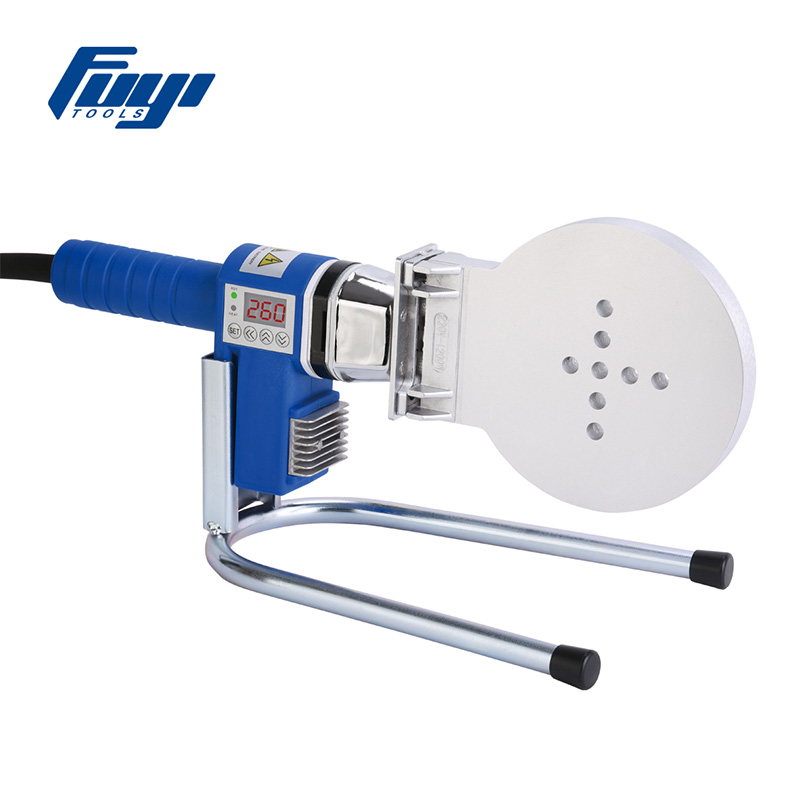
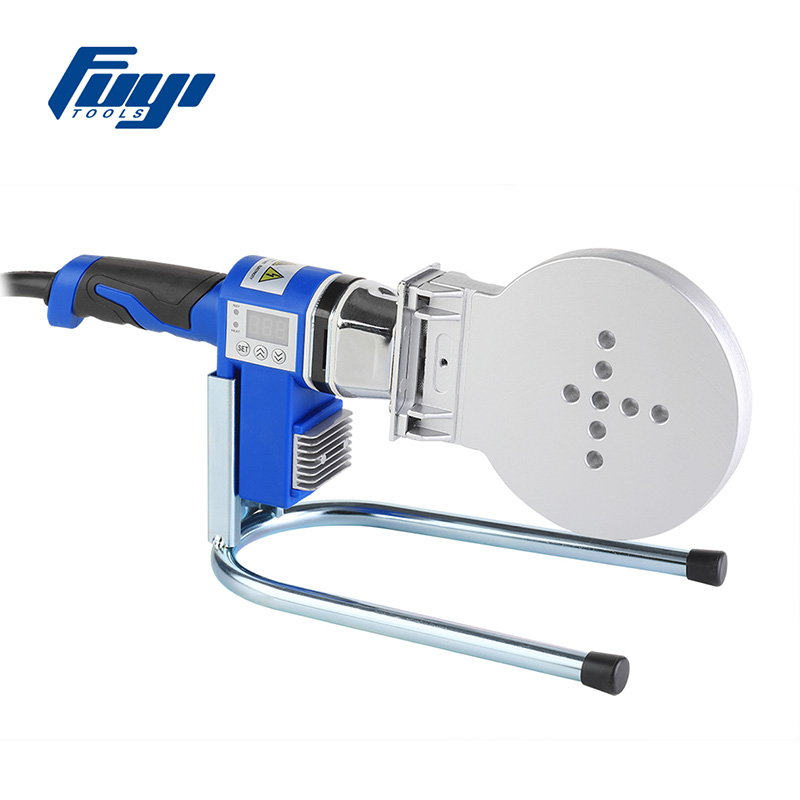
Because FR grades give you less room for error, the equipment you choose matters more than it does on standard PP-R. A machine with a clear digital temperature display lets the operator see what the tool is actually doing rather than trusting a dial mark, and stable temperature holding keeps successive welds consistent through a long shift.
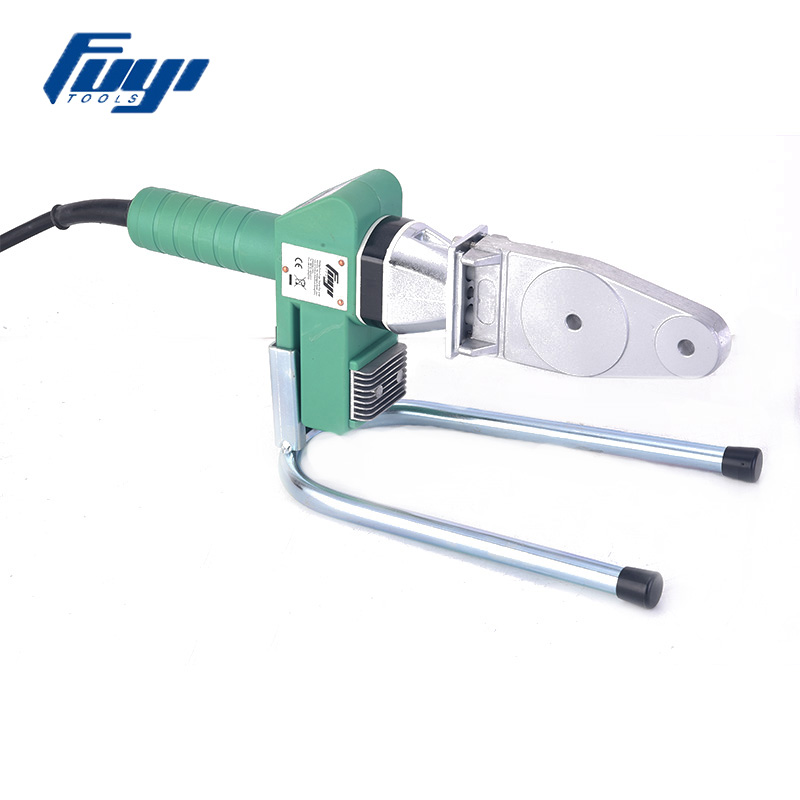
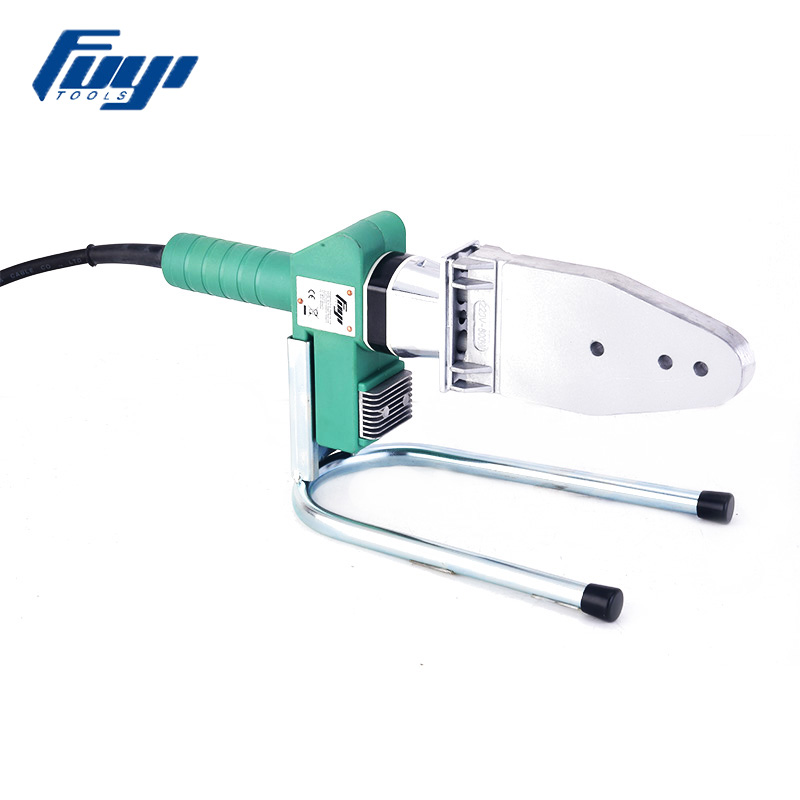
For daily installation work on small and medium diameters, a digital unit in the 20-63 mm class is a sensible workhorse. It gives you a readable set point, repeatable heating cycles and enough control to follow a compound supplier's parameters without guesswork.
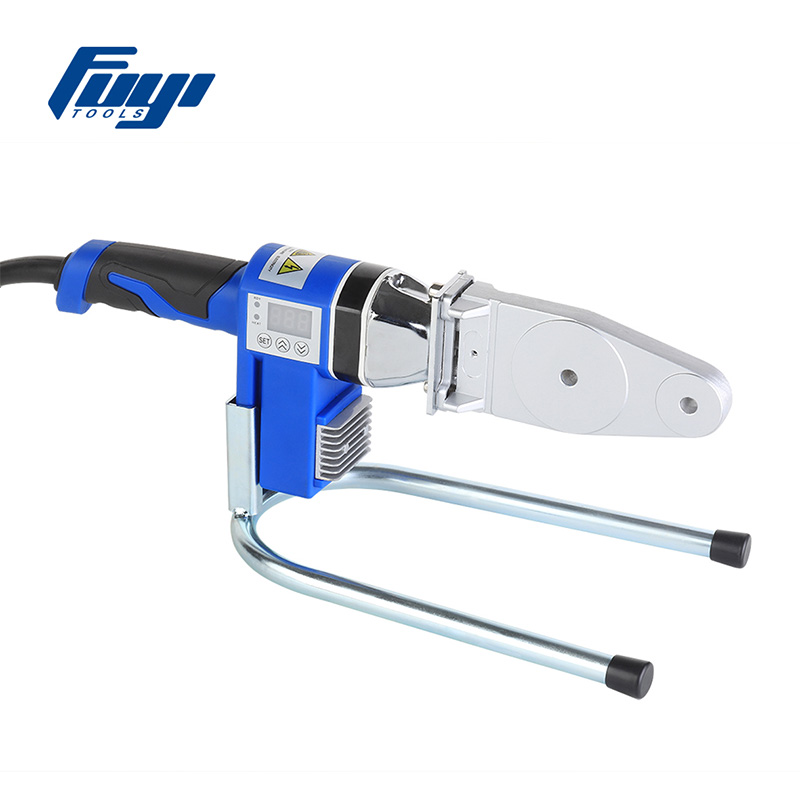
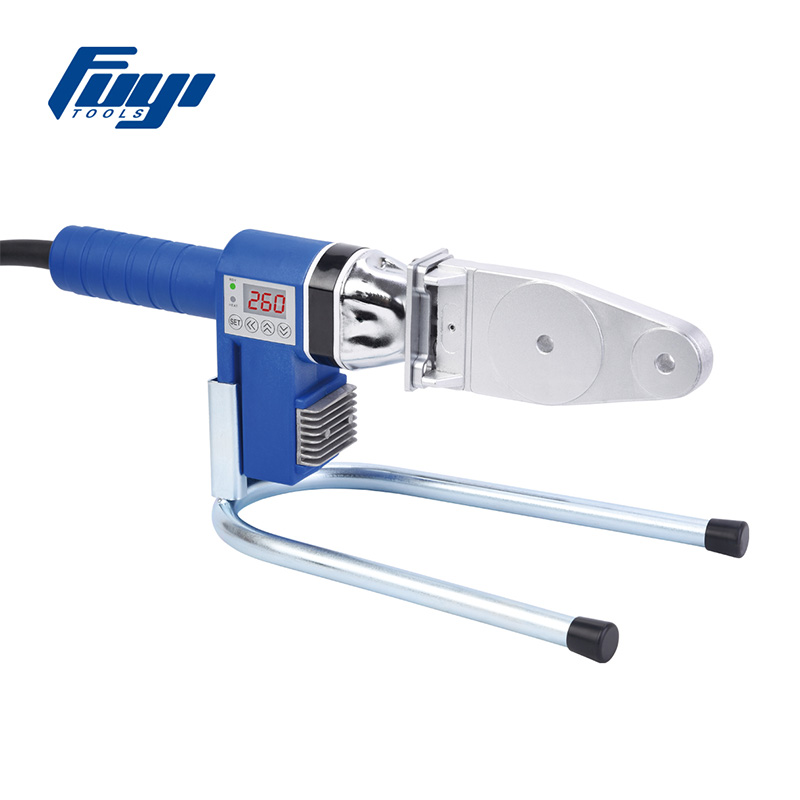
 FYD63 Digital Socket Fusion Welding Machine for PPR PipesA 20–63 mm digital socket fusion unit with LED temperature display and automatic compensation, suited to daily small and medium diameter PPR installation work.View Product →
Electrofusion for Larger Diameters
Where diameters grow or where there is simply no room to swing a socket fusion tool, electrofusion becomes the practical option. The fitting carries its own heating element and the machine supplies a controlled current for a set time, which suits buried lines, repair work and joints in tight trenches. On FR-PP systems this is often the more forgiving route, because the heat is generated inside the fitting rather than transferred through a heater face.
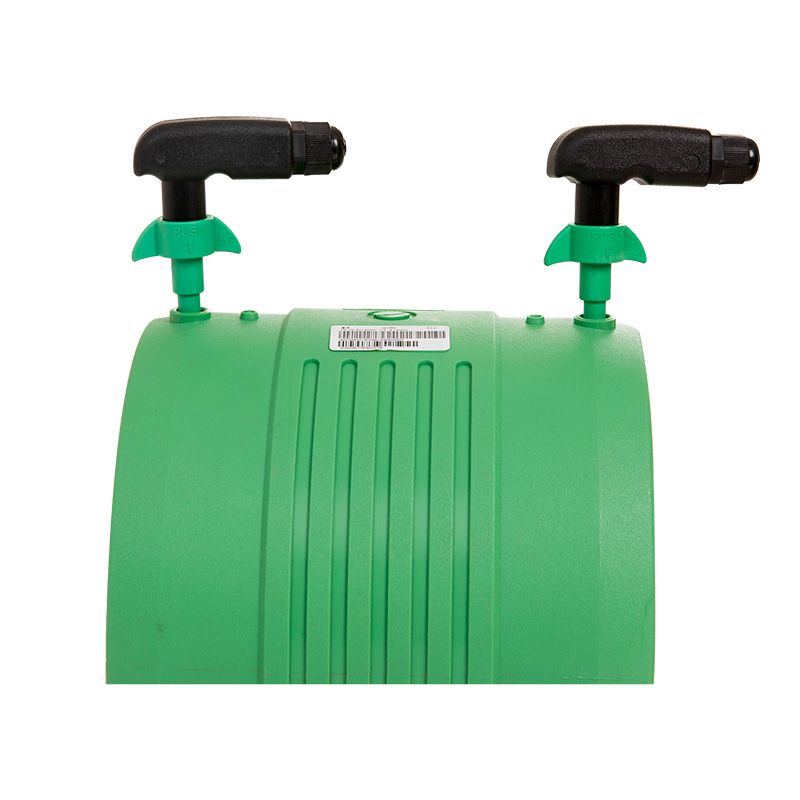 20–315 mm Inverter Electrofusion Welding Machine for Plastic PipesJoins PP-R, PP and HDPE pipes from 20 to 315 mm with controlled output, useful for larger diameters, repairs and joints in tight trenches.View Product →
A Short Field Checklist for Flame-Retardant PP
- Confirm the pipe or fitting is a flame-retardant grade and get the supplier's welding parameters in writing.
- Do not reuse PP-R settings; filled compounds need their own heating and cooling times.
- Store FR pipe and fittings dry, and keep them wrapped until the moment of use.
- Cut square, scrape the full insertion depth, chamfer the end and mark the depth line.
- Check the welding machine's actual temperature rather than assuming the dial is accurate.
- Weld a test joint at the start of each shift and inspect the weld bead before continuing.
Flame-retardant polypropylene solves a genuine problem, and it does so with a family of additive systems that each carry their own strengths and penalties. The one thing it does not do is behave like ordinary PP once heat is applied. Treat it as its own material, follow the compound supplier's parameters, keep the joint surfaces genuinely clean, and use equipment that lets you see and hold the temperature you have set. That combination is what turns a fire-rated pipe system into a leak-free one.
Related Products

 +86-158 6813 9123
 +86-571- 82432777
 selena.zhong@fuyitools.com
 No.7 Yangguang Road, Linpu Industrial Area, Hangzhou City, Zhejiang Province, China
Copyright © 2024 Hangzhou Fuyi Tools Co., Ltd. All Rights Reserved.
|
