

 Eng
 русский
 Español
Home / News / Industry News / ECTFE Plastic Guide: Properties, Applications and Fusion Welding Tips for Pipe Pros
Industry News
Oct 26,2026
ECTFE Plastic Guide: Properties, Applications and Fusion Welding Tips for Pipe Pros
ECTFE plastic rarely gets the spotlight that PTFE or PVDF enjoy, yet it quietly holds its own in some of the toughest service environments in modern industry. If your work involves aggressive chemicals, high-purity process lines, or fluoropolymer piping that has to be cut, fitted and joined on site, ECTFE is a material worth understanding properly.
We manufacture pipe fusion welding equipment and the tools that support it, so our attention tends to sit at the joint rather than only at the datasheet. This guide covers what ECTFE plastic is, where it performs best, how it compares with the fluoropolymers you already know, and what all of that means when the time comes to prepare and weld it.
What ECTFE Plastic Actually Is
ECTFE stands for ethylene chlorotrifluoroethylene. It is a semi-crystalline thermoplastic fluoropolymer, built as an alternating copolymer of ethylene and chlorotrifluoroethylene in roughly equal proportions. That structure explains most of its behavior: the fluorine and chlorine in the chain deliver chemical resistance, while the ethylene segments contribute mechanical toughness and, crucially, melt processability.
That last point separates ECTFE from PTFE. ECTFE can be extruded, injection molded, rotomolded and thermally welded, which makes it practical for pipe, sheet, fittings, valve linings and coatings rather than for gaskets and sintered shapes alone. It reaches the market as resin pellets, as coating powder, and as finished pipe, sheet and molded components.
Key Properties at a Glance
Every grade is formulated a little differently, so treat the figures below as a general picture rather than a specification. Your resin supplier's datasheet always wins.
| Property | Typical behavior |
|---|---|
| Chemical make-up | Alternating ethylene and chlorotrifluoroethylene copolymer |
| Melting point | Around 240 °C |
| Density | Roughly 1.68 g/cm³ |
| Service temperature | Approximately -76 °C to +150 °C |
| Chemical resistance | Strong acids, bases, oxidizers and chlorinated solvents |
| Permeability | Very low to gases, vapors and moisture |
| Flammability | Self-extinguishing, UL 94 V-0 in typical grades |
| Processing | Extrusion, injection molding, rotomolding, fusion welding |
Two rows usually decide whether ECTFE is the right answer for a project: chemical resistance and service temperature. The resistance profile is broad enough that ECTFE copes with concentrated caustic solutions and oxidizing acids that trouble other fluoropolymers, while the ceiling of roughly 150 °C keeps it below the perfluoroalkoxy family.
Where ECTFE Plastic Earns Its Keep
- Chemical processing: linings for tanks, columns and scrubbers, plus valves, pumps, pipe, fittings and sight glasses that see aggressive media.
- High-purity and semiconductor work: components that need low extractables, low permeability and a surface that cleans up reliably.
- Pharmaceutical and food handling: barrier properties and chemical inertness for process equipment and transfer lines.
- Wire and cable: jacketing and insulation where low smoke, flame resistance and chemical durability matter.
- Coatings: powder-applied and rotomolded linings that protect steel vessels, fasteners and impellers from corrosion and abrasion.
- General industrial parts: filter housings, wet-service bearings and abrasion-resistant components.
What ties these together is a need for durability in contact with something unpleasant, at a temperature that would defeat polyethylene or polypropylene. That is also why pipe fabricators with a background in PE and PP-R often find themselves working with ECTFE and its relatives.
ECTFE Compared with PVDF, PTFE and PFA
| Material | Melt processable | Typical service ceiling | Where it stands out | Keep in mind |
|---|---|---|---|---|
| ECTFE | Yes | Around 150 °C | Strong bases and oxidizing acids, low permeability, good abrasion resistance | Lower temperature ceiling than PFA or PTFE |
| PVDF | Yes | Around 150 °C | Stiff, strong, widely available in pipe and fittings | More vulnerable to strong bases and some polar solvents |
| PTFE | No, sintered | Around 260 °C | Broadest chemical resistance, very low friction | Not fusion welded; joined by gaskets, flanges or liners |
| PFA | Yes | Around 260 °C | High purity combined with high temperature resistance | Costs more and is softer than ECTFE |
If the service condition is caustic or strongly oxidizing, ECTFE often edges past PVDF. If you need the highest temperature ceiling regardless of cost, PFA or PTFE takes over. Everything else is a negotiation between temperature, chemical mix, mechanical load and budget.
Joining ECTFE Plastic: What Matters at the Joint
ECTFE pipe and fittings are normally joined by butt fusion or infrared welding rather than socket fusion, and the joint parameters come from the resin and pipe supplier. Socket fusion is more common in PVDF systems. Even so, the same disciplines apply across all of them: clean surfaces, the correct heating temperature, the correct dwell and cooling times, and no movement while the joint sets.
That means equipment with genuinely adjustable, repeatable temperature control rather than a dial with optimistic markings. A machine that holds its set point across a long working day gives you a weld you can defend, especially on a fluoropolymer where the processing window is narrower than it is for polyethylene. It is a theme we come back to often, which is why we wrote a short guide on how to choose the right socket fusion welding machine for different material requirements.
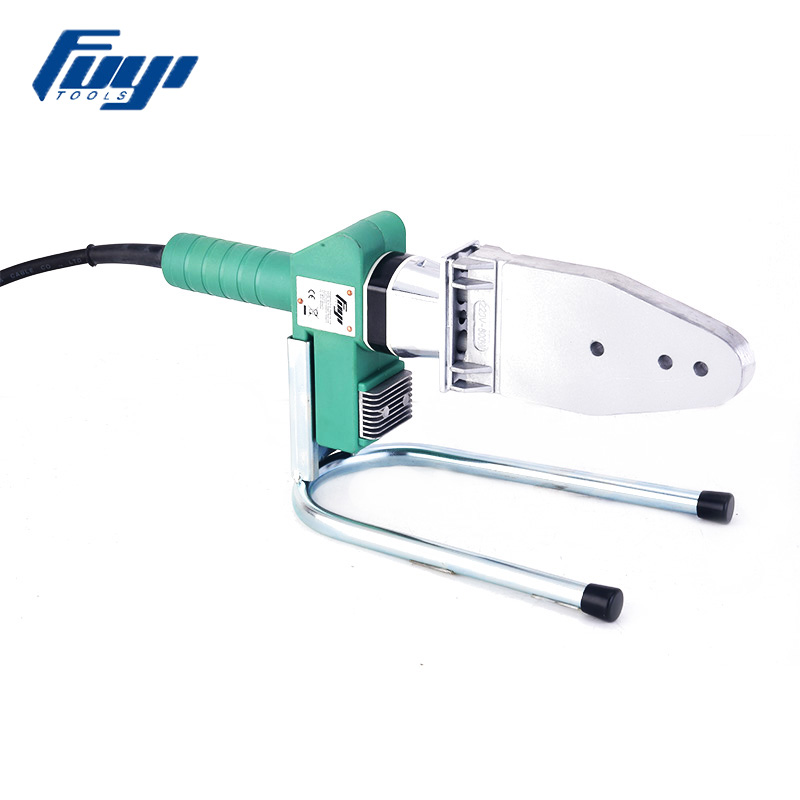
 FYDLL110 Portable Socket Fusion Welding Machine for PE, PP, PVDF, PBDigital, portable socket fusion welder with adjustable temperature and 220–260°C range, suitable for PE, PP, PVDF and PB pipe joints.View Product →
Machines built for PVDF, PE and PP work show what a controlled heating cycle looks like in practice, and that experience carries over when you move to a new material.
Temperature control is not negotiable
Run a fluoropolymer too hot and you risk degradation, discoloration and fumes you do not want in a workshop. Run it too cold and you get a joint that looks acceptable and fails quietly under pressure. The narrow band between those two outcomes is why a calibrated heating tool and a digital display matter more here than on a standard PE line.
Surface preparation decides the weld before you start
ECTFE has a low surface energy, so contamination, dust, moisture and the oxidized layer left by cutting all work against you. Cut square, deburr, then scrape or abrade the weld zone immediately before heating. A small set of surface preparation tools covers most of that work on site.
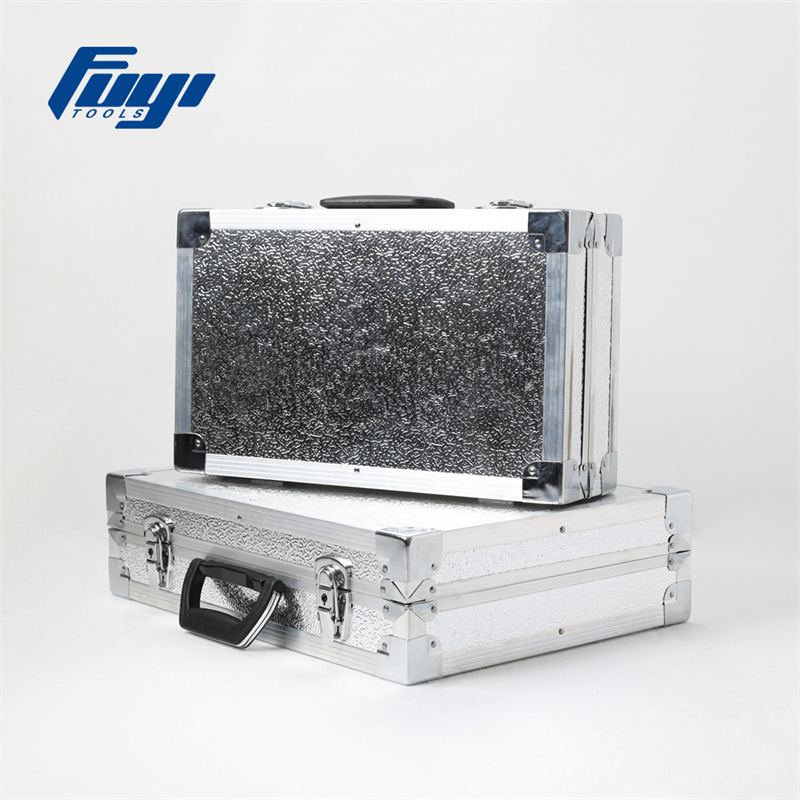 FYEPS400 Electrofusion Pipe Scraper for HDPE, PP-R and PPProfessional scraping tool for preparing plastic pipe surfaces up to Ø 400 mm before electrofusion, compatible with HDPE, PP-R and PP materials.View Product →
A Practical Checklist Before You Weld ECTFE
- Confirm the pipe and fitting grade with your supplier, including any pigment or additive that changes welding parameters.
- Verify the heating tool temperature with a calibrated surface probe, not the machine display alone.
- Cut the pipe square and deburr; an angled cut creates an uneven bead and a predictable weak point.
- Scrape or abrade the weld zone to remove the oxidized layer, then keep it clean and dry.
- Support both ends so nothing shifts during heating, joining or cooling.
- Respect the full cooling time; releasing a fluoropolymer joint early is how leaks begin.
- Record the parameters used — pipe size, temperature, heating and cooling times — so the next joint is repeatable.
Where We Fit In
Hangzhou Fuyi Tools has spent 16 years building pipe fusion equipment and the tooling around it, from constant temperature and digital socket fusion machines to electrofusion machines in transformer and inverter styles. Alongside those sit the smaller items that decide the quality of a joint: cutters, chamfering tools, cold ring pliers, measuring pads and scrapers.
For workshop fabrication, where spools are prefabricated before they ever reach site, a fixed unit makes a real difference to consistency and pace, because the operator is not fighting gravity and a moving pipe at the same time.
 Bench Socket Fusion Welding Machine 50-160MM with ElevatorBench-mounted socket fusion welder with elevator and pipe holder, for PP-R, HDPE, PB and PP pipes from 32mm to 160mm.View Product →
If you already run PE and PP-R equipment, the step up to fluoropolymers is mostly a matter of parameters, patience and clean preparation rather than an entirely new trade.
Whether you are already running fluoropolymer lines or moving into them from PE and PP-R, the fundamentals do not change: know the material, control the temperature, prepare the surface, and let the joint cool. ECTFE plastic rewards that discipline with long, quiet service in places where very little else lasts.
If you would like to talk through a specific application, our team is glad to help you match the right machine and tooling to the pipe and material you are running.
Related Products

 +86-158 6813 9123
 +86-571- 82432777
 selena.zhong@fuyitools.com
 No.7 Yangguang Road, Linpu Industrial Area, Hangzhou City, Zhejiang Province, China
Copyright © 2024 Hangzhou Fuyi Tools Co., Ltd. All Rights Reserved.
|
